Sunday, 12 March 2017

UNCERTAIN review

Now showing at the ICA and on demand from 17th of March, Uncertain is Ewan McNicol and Anna Sandilands' documentary about life in a town in the back end of nowhere.


If you find a place on a map labelled "Uncertain", you know there's going to be people there with some stories to tell, and that's what directors Ewan McNicol and Anna Sandilands decided to explore in this award winning documentary. Situated on the border between Texas and Louisiana, Uncertain is a small town with a population of 94, often used as a passing through point for criminals crossing state lines. The entire town has an eerie calm, like the setting to a Coen Brothers crime thriller lying dormant in wait for the next bad guys to show up. This documentary focuses on three different men from the town to uncover what life is really like there.

What is initially striking about the film is how gorgeous a location it is. The Caddo Lake and surrounding vegetation resemble a scene from a film set 50 years after an apocalypse, with the greenery allowed to grow unfettered. This is something of a concern for the current locals, with the unwelcome weed Salvinia (actually quite a sweet thing to look at) growing across the lake and choking the town of its fishing industry. Scientists are trying to find a way of stopping the lake from being entirely engulfed, with the future for the area looking bleak but then also quite beautiful.

It's on the Caddo Lake that we meet Henry, an old fisherman with a criminal past but who since the loss of his wife spends his days on his boat reflecting on his life, hoping he did enough good to balance out his misdeeds. He has a wonderful face that tells a thousand sad stories, and brings so much deep introspection to the film. The next key figure is Wayne, a hunter on the trail of a wild hog he dubs Mr Ed. Another man with a past he is haunted by, he is driven to catch and kill Mr Ed by the need for a sense of purpose more than anything. His past is the most colourful, and he is the most forthcoming about his struggle to grapple with his demons.


The last of the main subjects is Zach, a young man facing an Uncertain future with a drinking problem that is hampering his treatment for Diabetes. He sees no future for himself and hopes to leave the town before it is too late, but with minimal job prospects and declining health, the most he can aim for is a better standard of living elsewhere. As a young man he is leading a very different life to Henry and Wayne, but it's not a huge leap to see connections and possible similarities within the lives and journeys of these men. Zach has the potential to be the most tragic or hopeful of the subjects here, depending on what route he takes next.

With echoes of Alma Har'el's Bombay Beach (set in a visually different but equally neglected small town in America), it is the human element and how they survive within this landscape that is most captivating. As a consequence of the make up of the population all of the key figures are men, connected by a feeling that Uncertain is some sort of purgatory for them, stuck there to pay for their pasts and wait for the weeds to overtake them.

Uncertain is a visually striking and absorbing documentary that reflects on the ghosts of the past, the prospects of an uncertain future and the consequences of those choices made as a young man.

Verdict
4/5

Wednesday, 8 March 2017

BARE BREASTED COUNTESS DVD review

Driven to commit heinous crimes by an evil force, the Countess (Lina Romay) returns to the island she calls home and slowly begins to kill the locals using her powers of seduction.

Jess Franco's Bare Breasted Countess aka Female Vampire has been released under various guises and cuts in its lifetime (including a hardcore cut going by the not so subtle name of The Swallowers) and is rife with all the hallmarks of a Franco film; female nudity, dealings with the occult and a subject matter that made him the bane of film censors. It's also very, very silly. So the question is how best to approach this review? Tongue in cheek or tongue in.... well, I'll let you finish that sentence off yourself.

The opening scene sees our lead, the Countess Irina Karlstein (a mute ingenue with a penchant for parading around with her top off) meeting a young man at a farm, where she performs fellatio on him before chomping down to feed from him in semi (pun intended) traditional vampire fashion. As a mute it is hard to establish her motivations, but luckily she does provide a winsome voiceover to her cliff top drives and there's a handy reporter on hand at the start to help out with a lot of the exposition. Using her mouth as her weapon of choice she lures innocent young men with her feminine wiles and then performs deadly fellatio on them, or as the coroner puts it when he is presented with a corpse drained of semen and blood, he was "killed by mouth".
In terms of cinematic craft there's not a lot going for it, but the tropes and language of this softcore era are all present and correct here. At a time when throwback genre films such as The Love Witch are currently in cinemas, this is a great opportunity to see how close it comes to recreating the real thing. It's almost entirely dialogue free, just occasional snippets to connect one softcore scene to another; and although perhaps not as immediately reference friendly as Franco's Vampyros Lesbos, this is still classic European exploitation cinema. As well as direction from Jess Franco (under a pseudonym), this film also features two of his regulars in his muse Lina Romay and friend Jack Taylor, moustachioed and resembling a cut price Franco Nero.

Surprisingly and almost certainly accidental, there is a feminist subtext to this film with Irina ranking somewhere near Jess Weixler's Dawn in the horror/comedy Teeth for female characters who use their sexuality to satiate their needs against the wishes of the male led society. I'm certain that this reading was not what was intended during production and it's a bit of a stretch to imagine this film wanting to appeal to anything other than the male gaze (you could get yourself in serious trouble by having a drinking game for every time the camera lingers on a gratuitous crotch shot), but at least that way it affords the character more depth than what is on show.

Partially due to, shall we say, more sophisticated cinematic tastes and storytelling methods, it's hard to not make this kind of 70s era straight-faced eroticism look a bit funny by modern standards (just look at the success of Belinda Blinked), but that doesn't mean there isn't fun to be had here. The depiction of female sexuality is frankly ridiculous and laughable as she dry humps her bed frame and then a phallic shaped pillow, and the mere fact that the main character is a beautiful, sex-crazed woman who isn't able to speak a word says everything you need to know about the sexual politics of the time.

The first release from new boutique horror label Maison Rouge with collectable art cards and a reversible sleeve included with the DVD; if you're a fan of this kind of euro erotica then Bare Breasted Countess should be in your collection, and if you're a fan of cheesy, over the top films that will give you plenty to ponder over, it's worthy of a place too. I'm still not completely sure why she masturbates over the corpse of one of her victims, though.

Verdict 2/5 for filmmaking
Verdict 4/5 for fun, so...

Overall Verdict
3/5


Thursday, 2 March 2017

WE ARE X review

Filmed in the run up to their concert at New York's Madison Square Gardens, We Are X charts the 30 year career of X Japan, quite possibly the most famous rock band you've never heard of.


The following is an updated version of the review published after We Are X's premiere at the 2016 London Film Festival.

It's hard to see a music bio-doc these days without what I call "getting a touch of the Anvils". The life of a musician is a ridiculous collection of screaming fans, cliches and rock star behaviour, and although there's clear comparison points with Anvil, X Japan are a rock band who actually made it, but with a surprisingly small following in the western world.

Director Stephen Kijak's previous films include the Scott Walker documentary 30 Century Man and the Backstreet Boys doc, Show 'Em What You're Made Of, and here he wisely chooses to focus his lens on band founder member Yoshiki in favour of the others. He is the heart and soul of the band of androgynous appearance and almost indeterminate age (he could pass for someone younger than the band he created), who has dominated Japanese music, fashion and art for decades, starred in his own comic book by Stan Lee and is kept together by doctors whose various medications and therapies allow him to keep touring and performing. I'm sure there's a certain amount of showmanship involved, but Yoshiki wears a neckbrace when he drums to combat the damage from the excessive head-banging of his youth, which might be the most rock and roll injury there is.

The running joke in This is Spinal Tap is that the drummer's chair is a continuously revolving door due to its occupants choking on their own vomit/spontaneous combustion, but the opposite is true here. Yoshiki is the band's creator and chief songwriter who has remained the one constant, but there has been an immense amount of tragedy within the other roles in the band, including multiple suicides and unsolved deaths. These subjects are handled sensitively and are a tad under investigated, but in order to focus on the band as a touring entity, that's understandable. There is also a certain amount of unexpected comedy to their larger than life career, and lead singer Toshi's brainwashing by a religious cult is approached as an example of the pressures of being in the band.

Like their epic 30 minute rock ballad Art of Life there are many different facets to X's success, and this documentary (made with the full co-operation of the band) goes a long way to respectfully cover as many aspects as possible. It's hard not to fall in love with them and appreciate the longevity of their appeal, and even if you aren't a fan of their music beforehand, the performance footage with thousands of cheering fans chanting their battle cry "We Are X!" may soon change that.

There are a number of talking heads from famous western rock stars, including Gene Simmons who puts forward the idea that if X were comprised of white, English speaking men, they would be the biggest rock band in the world. He may have a point. Made with real affection for the band and its fans, We Are X is a crowd-pleasing documentary that proves that X go all the way to XI.

Verdict
4/5

Monday, 30 January 2017

LIFE, ANIMATED review

Now available on DVD is the newly Oscar nominated documentary about the life of Owen Suskind, a young man with autism who found a way to make sense of his condition through Disney movies.


Directed and produced by Roger Ross Williams who won an Oscar for his documentary short Music by Prudence, he once again finds himself in awards contention with Life Animated. We meet Owen at an important juncture in his life. In his early twenties he is about to leave home and move into an apartment of his own for the first time. He is a sociable and capable young man who has used the world of Disney films to make his way through his autism, as previously documented by his Pulitzer Prize winning father Ron in his book of the same name.

Like any normal family a lot of their son's childhood has been captured on video, and this is shown to illustrate how Owen changed so dramatically at such a young age. We flashback to 1993 when Owen was a young boy, playing in the yard with his father, and it impossible not to feel their pain when at only 3 years old, Owen retreated into himself and left his parents clueless as to what had happened to him.

What's clear from Life, Animated is that Owen is fortunate to have such a wonderful family. Ron and Cornelia are wonderful parents that have unique insights that some doctors wouldn't have been able to notice, such as the revelation that when Owen drew Disney characters, he would only draw the sidekicks. It's the Disney films that have allowed them to build their understanding of how Owen feels about himself. He has a poster of The Hunchback of Notre Dame on his bedroom wall not because it is simply one if his favourites; he relates to the Hunchback as someone who is viewed differently and at times ridiculed by society.

Also on hand is his older brother Walt (yes, Disney obsessed Owen's brother is actually called Walt) who says how he's been getting ready his whole life to eventually take over Owen's care. It's clear that he sees this not as a burden, but a show of how closely knit they are as a family. He's concerned about big brother stuff like Owen's relationship with his girlfriend Emily, and how as "Owen's basis for pretty much anything is Disney" he is struggling to broach the concept of sex to him, but Disney porn is briefly considered.

Owen is the complete star of the film, and what he has been able to achieve is remarkable, autism or no autism. Owen started up a Disney club at his school in order to share his passion and make new friends, and he is able to attract special guest speakers at the club to reenact scenes with members, including what is hands down the best surprise cameo of the year. It's a moment so great, it cannot fail to bring a tear to the eye.

Also incorporated into the film are animated segments that act as an imagining of Owen's internal world when he was a child. Rather than being like a colourful Disney cartoon, it's a bleak, stripped back, black and white sketching that completely encapsulates his isolation whilst also being beautifully realised. It is at odds with the charming and lively Owen we meet in the present day, but it works in showing how far he has come.

A film that is so joyous an experience it is easy to adore; it will speak to those who have children who are considered different from the norm, but this really is a film for any parent. You don't have to be a Disney aficionado to appreciate Owen's infectious attitude towards his favourite films (he still watches the same VHS copies he collected as a child), but it's hard to disagree that this does make Disney films and the world their characters inhabit look completely magical.

Verdict 5/5


Wednesday, 23 November 2016

GIMME DANGER review

Out now in cinemas and on VOD is Jim Jarmusch's documentary about rock and roll pioneers, The Stooges.
Gimme Danger starts in typically unconventional fashion, showing the band perform after they've recorded all their albums and are on a path of immediate self-destruction, explaining that "The Stooges are one of the most influential groups in the history of rock and roll, but in 1973 they were dirt".

Flashing back to the band's formation, our narrator throughout this journey is the band's frontman and rock icon, Jim Osterberg, aka Iggy Pop. Iggy is one of those rock and roll figures, like Keith Richards, where it's hard to explain how he's still alive. Yet alive he is, a survivor of all the sex, drugs and rock and roll, and able to (impressively) recall so much about the history of the band, his influences and how he ended up where he is today. Starting out as a drummer for various bands in the late '60s, he moved to the front when he "got tired of looking at someones butt all the time".

Billed as the story of The Stooges, this documentary is honest enough about knowing the audience desire to focus on Iggy's time in the band, and is a better film for it. That's not to say that the other members of the band are ignored or even short changed, but when dealing with a force of nature like Pop, it's best to stand aside and allow him to take centre stage once more. Hey, even the band acknowledged this in their lifetime by often being billed as Iggy and the Stooges, and this film does a lot to show that Mike Watt, James Williamson, the Asheton brothers and so on, were more than just his backing band.

I'll be honest that apart from some rudimentary knowledge of the band's greatest hits, I was not aware of the history of The Stooges; their move from Michigan to New York, hanging out with Andy Warhol and Nico, Iggy inventing the stage dive and knocking his front teeth out in the process, and their under-acknowledged position as the fore-fathers of the punk movement. Iggy has been one of the most iconic frontmen of the last 40 years, and I would have to question director Jim Jarmusch's choice to place him centre frame and then under explore the solo career that followed, including his work with Lou Reed and David Bowie and growth into a godfather of rock and roll excess. It would have been a very different film, but it may have been a more rewarding one. Jarmusch has worked with Pop in his films before (Dead Man and Coffee and Cigarettes) and clearly has a good relationship with him, and perhaps felt that this chapter of his life was the most defining one.

Jarmusch is clearly a fan of the band (in his opinion "the greatest rock and roll band ever"), and Gimme Danger is successful at showcasing The Stooges as a vital live act who never achieved the recognition they deserved at the time. As this documentary comically states about the time the band drove their equipment truck into a bridge "they were victims of the lack of their own professionalism", but more than anything this documentary is able to express the band's desire to keep the show on the road, showing their rebirth into a modern music festival highlight.

Like the archive footage we see of the band's performances, Gimme Danger has a raw quality to it, but Iggy shines through and was born to entertain.

Verdict
4/5

THE BEATLES: EIGHT DAYS A WEEK - THE TOURING YEARS review

Money may not be able to buy you love, but it can buy you this lovely new exploration of the Beatles's touring years to watch at home, as loud as you can get it. Out now on DVD and blu-ray, Ron Howard's latest documentary follows the Fab Four during their formative years on the road and on their way to mega stardom, allowing you to be part of the mania.

If you're of a certain age like me, you'll not have been able to experience the Beatles in their heyday, only experiencing them through short clips on television that are used to celebrate their cultural importance. Part of the joy of this documentary is the chance to go long with their performances, soaking in all the atmosphere of their concerts and almost as entertainingly, their interviews with journalists, completely sideswiped by these cocky young men from Liverpool. Showing what brilliant musicians they were, playing to a packed crowd at Shea Stadium (through the crackly PA system, not that you could hear the band over the screams of fans anyway), they remain ever the showmen carrying on through the din, and in sync.

This is not a documentary about life in the Beatles as a whole, plagued with infighting, musical differences and, gulp, wives and girlfriends. This is a very specific snapshot about a very specific period in the bands existence in the 1960s when they were bigger than... well, you know who. As one of the most important and documented bands of the 20th Century, it's surprising to see how much new footage is presented here, making this a nostalgia binge for lifelong Beatles fans and an eye opener for people who under-estimate how much of a worldwide phenomenon they were.

It does place the band in the wider context of what was going on in the world, for example, the band's refusal to play to segregated audiences in America was a bold move that the band haven't been given enough credit for. Among the people able to offer some fascinating insights is Whoopi Goldberg, expressing her heartfelt reasons for loving The Beatles and what they stood for and stood up against.

Being on the road for such an extended period of time of course had a huge impact on their personal lives, but it's only their musical experimentation that's explored here. There's no John and Yoko, no Paul and Linda. Just John, Paul, George and Ringo and the connection and camaraderie between them has never been more clear. Yes, they make fun of each other, but it's out of brotherhood borne out of their rarest of situations. This documentary shows them becoming grown ups on the world stage, the band (in particular John) learning the hard way that there were scores of people waiting for them to put a foot wrong, ready to admonish them.

The Beatles: Eight Days A Week - The Touring Years may be cumbersomely titled and quite US-centric, but there's absolutely no contest that this is Ron Howard's best film of the year. The choice to limit its scope to these years pays dividends, although a follow up chapter would be most welcome. A lovingly crafted documentary that, although it may not be able to offer too many revelations, is still a must see for any Beatles fans. It's fantastic and infectious; in short, it's fab.
 
Verdict
5/5

Extra Features

Available in a few different formats, the 2 disc Collector's Edition features a whole disc of extras including a 64 page booklet with photos from The Beatles' private archive and an essay from music writer Jon Savage; a short documentary about the band's approach to songwriting with new interviews with Paul and Ringo; another short doc looking at the band's pre-fame existence in Liverpool; and the jewel of the extras is The Beatles in Concert, with live performances of some of their most iconic hits at one of the loudest locations you'll ever see.

Sunday, 6 November 2016

ASSAULT ON PRECINCT 13 - 40TH ANNIVERSARY BLU-RAY review

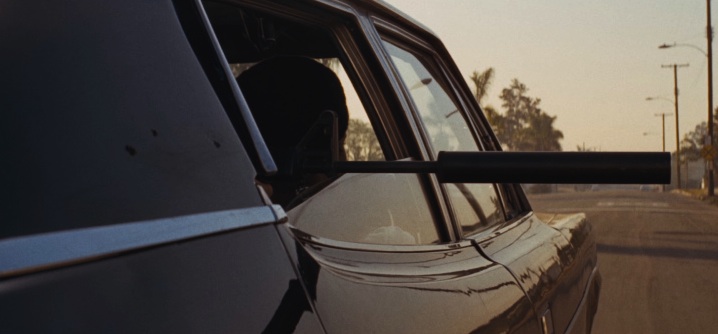
Celebrating its 40th Anniversary this year, John Carpenter's Assault on Precinct 13 sees a group of cops and criminals held up in an abandoned police station as they face off against a group of bad guys out for revenge against one of their inhabitants. All that stands between them and the gang knocking at their door is their wits and a couple of shotguns.

Carpenter is currently riding a wave of popularity for his instantly recognisable scores, touring his music to fans young and old. Assault on Precinct 13 has one of those scores, his rich electronic tones a welcome addition to any cinematic experienceThere's a real possibility that this newly re-released package will be seen by an audience more familiar with the films that have drawn inspiration from it like Shaun of the Dead, From Dusk til Dawn or even the 2006 remake, but the original stands up on its own. I say original, for as Carpenter freely admits, this is for all intents and purposes a reworking of Howard Hawks' Rio Bravo with its depiction of 1970s lawlessness harking back to the savagery of the old west. Likewise, George Romero's Night of the Living Dead can be seen as strong influence, with the film's black protagonist and the largely faceless horde eager to gain access to the station. There is no one true leader, just an angry, violent and ignored element of society.

Personally I've always worried that, barring a couple of exceptions, Carpenter's films are better in idea than in execution, but I would happily class Assault on Precinct 13 as one of those exceptions. Perhaps it's worth noting that this is "Assault on Precinct 13, a film by John Carpenter" rather than "John Carpenter's Assault on Precinct 13", made at an earlier point in his varied career when he wasn't (to draw on his recent tour for a metaphor) playing to an audience who knew all of his greatest hits. His second theatrical release (two years after Dark Star but two years before Halloween), there's still that raw quality to his filmmaking that has been understandably honed across the course of his career.

One thing that instantly stands out on this new blu-ray is how surprisingly good this 40 year old film looks. The film is much more than just the siege scenes, and a lot more scenes take place during the day than I remembered, taking its time in establishing the tone and characters before thoroughly pulling the rug out from underneath its heroes (and anti-heroes). Precinct 13 has some scenes that have grown in infamy over the last 40 years (I'm looking at you, Ice Cream Truck scene) and it's to the film's credit that they're still able to pack a real punch, even by today's standards of gratuitous and un-signposted violence.

Anchored by some solid performances by Austin Stoker and Darwin Joston as the excellently named Ethan Bishop and Napoleon Wilson, if this is your first experience or you are a Carpenter fanatic, this new package has a wealth of extra features that make it worth a look. Assault on Precinct 13 is Carpenter at his stripped down, action heavy best.

Extras include:

- Commentaries from John Carpenter and Tommy Lee Wallace
- Interview with star Austin Stoker
- Interview with Carpenter's right hand man Tommy Lee Wallace
- Interview with executive producer Joseph Kaufman
- Trailer
- The Limited edition box also includes art cards and a copy of Carpenter's electronic score


Thursday, 27 October 2016

LONDON FILM FESTIVAL: PERSONAL SHOPPER review


Re-teaming with her Clouds of Sils Maria director Olivier Assayas, Personal Shopper stars Kristen Stewart as a medium in Paris haunted by the death of her twin brother.

Based on a promise to send a sign from the other side that she and her brother Lewis made to each other before he died, Kristen Stewart's Maureen has remained in Paris, visiting fashion houses to find outfits for the vapid celebrity she works for. Soon she finds herself falling into a world of death and suspicion that may have more to do with her than she wants to admit.

There's no getting around it. Personal Shopper is a completely bizarre offering that is impossible to pigeon hole; but since when should that be a negative thing? Mixing genres in a manner that should create a red carpet disaster, instead we're given a wholly unique and bold statement that is equal parts head turner and head scratcher. It starts in a seemingly traditional haunted house set up where Maureen believes her brother's spirit may still be, before adding in a hefty dose of workplace boredom (despite her job looking kind of fun), topped off with a prolonged dialogue free sequence where Maureen has a flirty text based game of cat and mouse with a supposed admirer/potential stalker, all while travelling to London and back on the Eurotunnel.

Surprisingly, among all this chaos the film actually works; as a dark comedy, as a ghostly chiller and as a piece of entertainment. That could be attributed to the bold direction of Assayas, but more so the praise should be levied at Stewart. Moving further away from her role in the Twilight films that made her a star, here she continues to announce herself as an actor to be reckoned with. As Maureen she is in nearly every frame of the film, her fantastic ingrained laisse fair expression befitting her character perfectly. Stewart is known for that slightly cold disconnection that has followed her throughout her career, and in many ways she is the ultimate millennial malaise poster girl; but a fearless approach to role choices has served her well in recent years and will continue to define her as an actor more than those sparkly vampires ever did.

With its elements of horror and the fashion world coming together, there's a risk of it being compared to Nicolas Winding Refn's The Neon Demon, although this is a much darker affair that will keep audiences guessing right up until the final moments of the film. A wickedly bizarre marriage of Pret-a Porter/The September Issue and The Orphanage/The Others, Personal Shopper is a completely baffling film that defies all expectations. A goofy delight.


Verdict
5/5


Monday, 24 October 2016

THE GREASY STRANGLER review

Perhaps the craziest and most disgusting film we will see in our lifetime, The Greasy Strangler is now out on DVD and blu-ray.


I, err, well, err, what?

If you had asked me for an immediate reaction after first seeing The Greasy Strangler, that may have been all I was able to put together. Part of the line up at this year's Sundance London Film Festival, The Greasy Strangler has to be the most insane film released in cinemas this year. We are introduced to Big Brayden, a lank-haired oddball who lives with his father Big Ronnie. Together they operate con artist tours of the local disco hotspots, pointing out the street corners where some of the greatest hits of the seventies were supposedly created. It's on one of these tours that Brayden meets Janet, a local girl he starts a romantic relationship with, causing Big Ronnie's jealousy get the better of him and the return of a murderer who goes by the name of The Greasy Strangler.

It's no spoiler to say that Big Ronnie is the aforementioned strangler, attacking his victims in bloodthirsty, animalistic fashion, all while covered head to toe in a thick layer of grease. Ronnie then covers his tracks by putting himself through the car wash ran by his blind friend Big Paul, before hitting the town in his crotchless disco get up to dance the night away. Yes, that actually is the plot of a movie that you could be watching right now, but instead you're reading this. Thanks for the hits, but you really need to sort your priorities out.

Big Ronnie (played by the exquisitely named Michael St Michaels) is the cinematic villain of the year. A deliciously greasy bastard who is fuelled by hate and hotdogs, his thinly veiled contempt and outright hostility towards his son is something to behold. Choosing to blame his son for his wife leaving him for a man named Ricky Prickles, whenever his rage hits a certain level he feels the need to murder again, covering himself in a thick layer of grease before he does so. St Michaels has a fantastically condescending voice, spouting puerile and grotesque one-liners designed to keep his son right where he wants him; in the kitchen cooking the most disgusting and greasy food you will ever see.

Brayden (Sky Elobar) is a sweet idiot man-child held back by his domineering father his whole life, only choosing to stand up for himself and try to expose his father as the strangler when he fears that he's next on the list of victims. Their relationship is Steptoe and Son re-imagined through the eyes of The League of Gentlemen, a fucked up family portrait with genuinely appalling characters at its heart. Janet, the "hootie tootie disco cutie" that gets between this family unit is for all intents and purposes the femme fatale of the film, and despite an unglamourous approach to nudity that revels in the unconventional, there is an underlying sweetness to her and Brayden's romance that will almost make you forget what this film is actually about. Not for long, obviously.

Produced by Ben Wheatley's Rook Films and released by Elijah Wood's SpectreVision production company, this is literally the most invasive movie I've ever seen, and I mean that as a positive. This film doesn't just get under your skin, it gets all over it like a thick layer of... well, you get the analogy. There's so many things in The Greasy Strangler that should make you want to gouge your eyes out, but instead, it draws you in and forces you to love it. I was fortunate enough to catch The Greasy Strangler at this year's Sundance London Film Festival (where they bring the most revered and buzzed about films over from Utah), and although at first I wasn't completely sure that I even liked it, I found myself thinking about it on an almost daily basis and wanting to recommend it to everyone I know, to the point where I realised that yeah, I actually really like its batshitcraziness.

I suppose if you pour enough grease into your eyes and ears it's going to seep into your brain, and that's the effect I want from a midnight movie. This film is destined for word of mouth infamy, and with its infectious electronic soundtrack, disgusting behaviour and the strangest way of pronouncing potato you will ever hear, this is genuinely subversive in a way you can't call bullshit on. Unquestionably hideous at times, love it or hate it there's no doubt that The Greasy Strangler is that rarest of things; a completely unique cinematic experience.

Verdict
4/5

DVD extras include a commentary from the director and stars.

Sunday, 16 October 2016

SWISS ARMY MAN review

Paul Dano stars as Hank, a man stranded on an island and close to suicide when a farting corpse called Manny (Daniel Radcliffe) washes up on shore, quickly realising that he may be his only hope of survival and escape from the island. Swiss Army Man is the latest release from distribution company A24 (who after Green Room, The Lobster and American Honey can do little wrong this year), picked up after the film caused quite a stir at Sundance.

From directing duo Daniels (whose background is in left of field TV comedies like Children's Hospital and NTSF:SD:SUV, and yes, they're both called Daniel), Swiss Army Man could quite easily have been little more than Weekend at Bernies meets Cast Away. Both excellent films in their own special way, but thankfully this is neither as slapstick as Bernies nor as isolated as Cast Away. The film, largely a two hander between Dano and Radcliffe's beached boys, is full of invention, and a bizarre and unique idea that pays off.

I'm not one who's easily amused by fart jokes, and although it's understandable why Swiss Army Man has become known as the farting corpse movie, it's much more. So much more. Despite delivering a number of fantastic performances in recent years, it hasn't been the easiest of tasks for Daniel Radcliffe to free himself from the shackles of the boy wizard. Well, nothing announces yourself as a fearless actor more than appearing in a film that features a close up of your hairy arse crack and an erection that doubles up as a compass.


Rather than just emitting bodily gas, Hank soon learns that Manny is able to provide him with everything he needs to survive; drinking water, chopping tools, and eventually conversation, as he starts to relearn the ability to talk. Showing himself to be a highly talented comic actor, as Radcliffe's Manny regains sentience and a boyish innocence to romance and the world, his ability to deliver a one-liner that would be a social faux pas in polite company is both hilarious and signifying of the burgeoning bond between himself and Hank.

Dano is one of the most talented actors working in independent cinema today with a near impeccable taste in projects. However, it appears that he is well aware of his typecasting as the lonely, hopeless romantic type, and Swiss Army Man both plays to and subverts that image. Hank is in love with a woman he rides the bus with every day, and it is the exploration of his relationship with her that provides an introspective commentary between himself and Manny that helps solidify their bond.

A story of the power of friendship and what it means to be alive, together Hank and Manny create a makeshift world from trash, recreating scenes from Hank's life that allow him the chance to do things differently this time. In this respect the film taps into a Gondry-esque charm, recalling the creativity of Be Kind Rewind along with the emotional introspection of Eternal Sunshine of the Spotless Mind. This approach also applies to the soundtrack which largely consists of a vocal chorus, provided by Andy Hull from Manchester Orchestra. It's dreamlike and ethereal and unexpectedly touching.

Based on its synopsis alone, it is understandable why audiences may be sceptical, but they needn't be. Paul Dano is dependable as ever and Daniel Radcliffe provides what is undoubtedly one of the bravest performances I've seen in a long time. Surprisingly deep and introspective, Swiss Army Man is a philosophical, funny and flatulent delight that deserves to be talked about as one of the greatest films of the year.

Verdict
5/5