Saturday, 22 October 2022
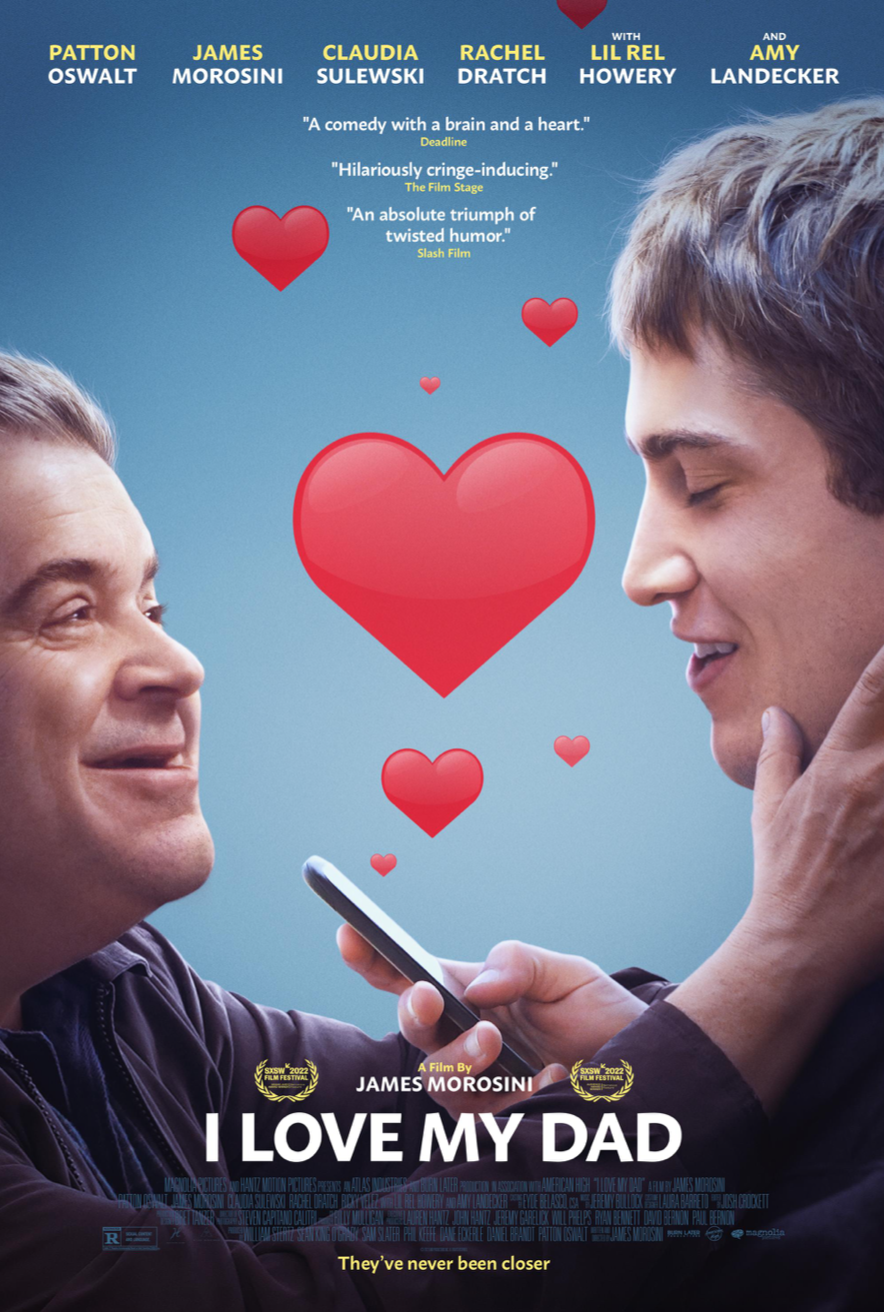
I LOVE MY DAD - London Film Festival 2022
Wednesday, 19 October 2022
SICK OF MYSELF - London Film Festival 2022
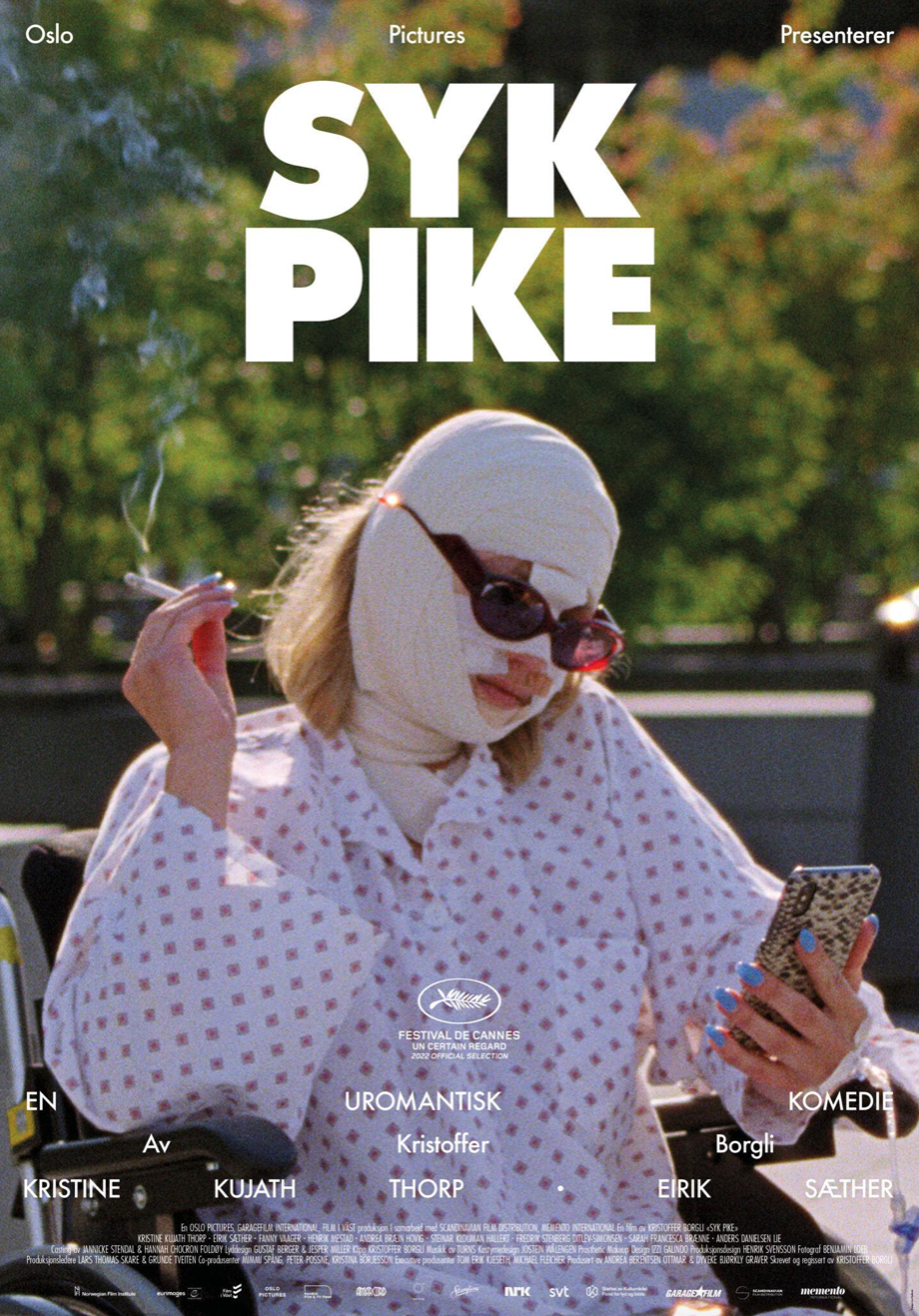
Plunged into an existential dilemma after she witnesses a woman mauled by a dog outside the cafe where she works, Signe (Thorp) finds herself indulging in the attention she suddenly receives from her friends, making sure she's okay after such a traumatic experience. But when the spotlight shifts to her artist boyfriend Thomas (Eirik Sæther) - a kleptomaniac whose work consists of furniture stolen from public buildings - Signe finds a way to regain the sympathy of her friends by buying a supply of dangerous pills on the black market that count ghastly skin growths among their side effects. Arriving hot on the heels of The Worst Person in the World and last year's Ninjababy (which also starred Kristine Kujath Thorp), Sick of Myself is the latest example of Norwegian cinema's exploration of narcissism.
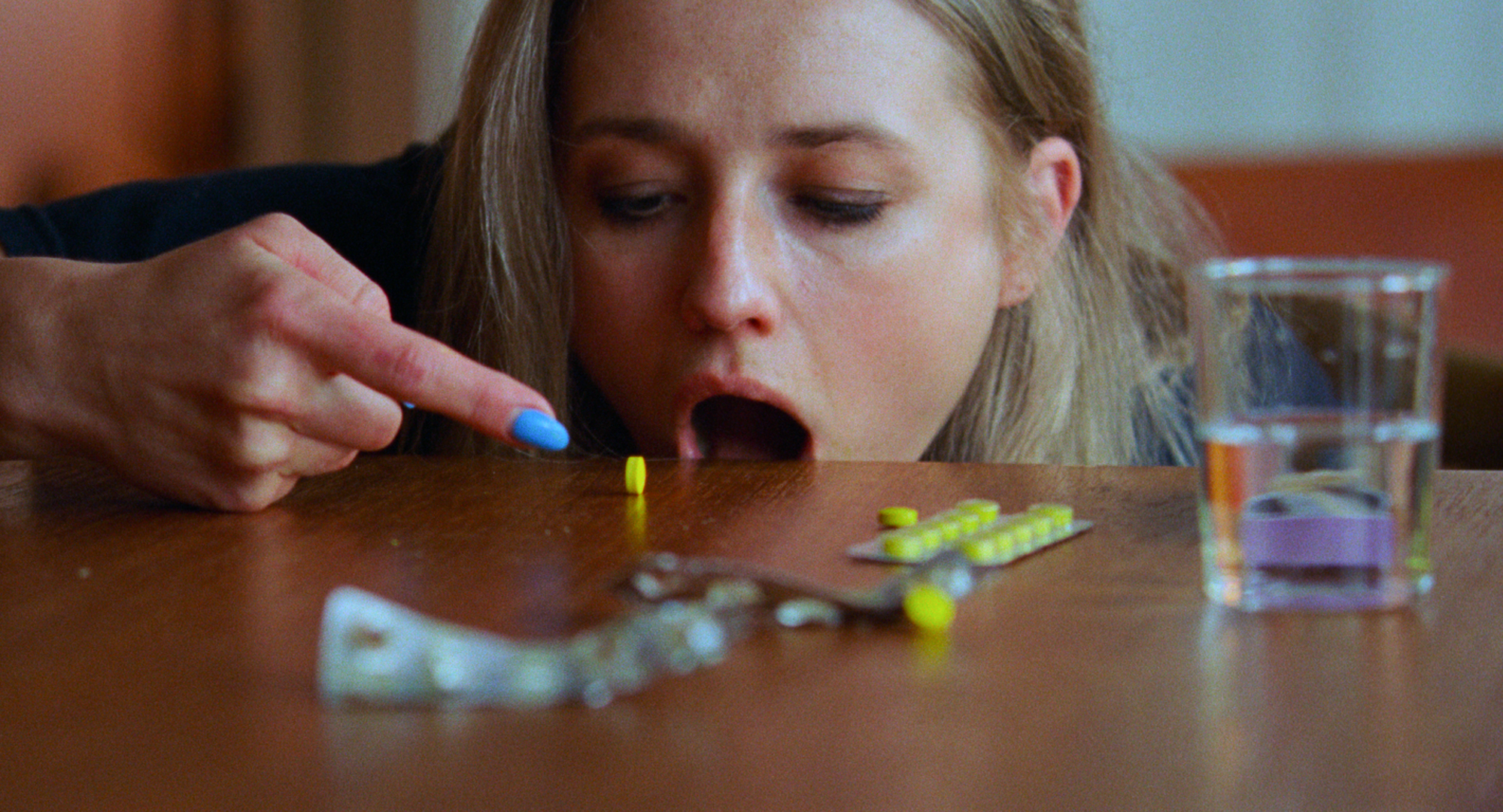
Once Signe ingests the dangerous pills - increasing the dose when it doesn't have the immediately gratifying effect she desires - and finds herself hospitalised, the film's darkly comic tone goes into overdrive, with Signe, bandaged head to toe, in orgasmic pleasure at the thought of queues lining up at her funeral to mourn her. A symptom of her narcissism, she has flights of fancy - some comedic, some horrific - that either way see the focus put on her and taken away from her equally self-indulgent boyfriend, just as his career as an artist/provocateur is on the rise. It's when the bandages come off that Signe's plan really comes together. Lying about the pills and claiming her appearance is the result of an undiagnosable illness, the patterns the lesions form on her face are oddly beautiful, turning her into something of an unconventional beauty icon, with photo shoots and modelling contracts on the horizon. Everything Signe could have wished for, but not without consequences.
Written and directed by Kristoffer Borgli, Sick of Myself is an entertainingly cynical comedy that dissects the idea of celebrity and performative sympathy in the modern social media age. Is Signe a bad person for wanting to indulge in her fifteen minutes of fame, and exploit the attention she's given due to her physical appearance? In short, yes. But, Sick of Myself goes some way to show she's not the only one, with the industry behind this exploitation using her "unconventional" look to sell a fashion line also coming under fire. It's bitingly funny, equally cruel, pushing us as an audience to ask if Signe is someone who should be sympathised with or laughed at for the lengths she feels she has to go to to be relevant. As a pretty young blonde woman, superficially she could have it all and has traditional society on her side. Her only failing is her personality - flaws, warts and all. But she can't bear to be average and is prepared to sacrifice her health to give her an edge.
As the shallow Signe, Kristine Kujath Thorp's performance is strong enough to let the audience switch between empathy and disgust as the inevitable monkey's paw aspects of the plot kicks in. Also great in 2021's Ninjababy as a reluctantly pregnant young woman (if you haven't seen that film, you'll want to after seeing her performance here), Thorp is an absolute star on the rise. Stomach churning make up effects or not, you can't take your eyes off her for a second.
After The Worst Person in the World and Ninjababy looked at modern women's relationships to love, men, and having children, Sick of Myself is a refreshingly acerbic against their more sombre tones, but is equally successful at probing these topics on a more fantastical stage than its Norwegian cinema counterparts. At once a critique of the fashion & beauty industry and celebrity status hunters, and a nauseating real world body horror, Sick of Myself is the most grotesque black comedy since Death Becomes Her, delivering a timely warning to the influencer generation of the perils of grasping for fame.
Verdict
4/5
Sick of Myself was part of this year's London Film Festival. It will be released in the UK early next year.
Friday, 14 October 2022
AFTERSUN - London Film Festival 2022
Starring Paul Mescal and newcomer Frankie Corio as a father and daughter on holiday in Turkey, Aftersun is director Charlotte Wells's nostalgic ode to the special bond that exists between parent and child, and how memories of our past stay with us. Taking place sometime in the late '90s (the soundtrack - Bran Van 3000's Drinking in L.A., Los Del Rio's Macarena - and fashions quickly establishing that to anyone who remembers the era) over the course of a summer holiday at a resort in Turkey, Aftersun arrives at this year's LFF with huge festival hype after its debut at Cannes earlier this year.
Unlike his Normal People co-star Daisy Edgar-Jones who was quickly snapped up to star in everything from cannibal comedy horror Fresh to winsome literary adaptation Where the Crawdads Sing, aside from his appearance in the ensemble of last year's The Lost Daughter audiences have so far been kept waiting for the big screen bow of Mescal. Here, as 30 year old Calum, young father to 11 year old girl Sophie, he takes on a similarly brooding, almost tragically emotionally distant character. There's clearly some shared DNA between this and Connell in Normal People, but as much as that role showed us how nuanced and capable he was as a performer, Aftersun expands on that further, making Calum one of the most relatable and troubled father figures in recent memory.
The strength of the film undoubtedly lies in the bond between Calum and Sophie, so close in age that they're mistaken for sister and older brother by other holidaymakers. Amicably separated from Sophie's mother who has moved on to have a family with someone else, this holiday is Calum's opportunity to spend quality time with his daughter over the summer break before she returns to the normality of her life in Scotland, as well as find the serenity he desperately needs in his life. Despite the pent up issues he struggles to hide - presented through undisclosed injuries and disappearances that he can't explain to his daughter - Calum is immensely proud to have Sophie and wants to steer her in the right way in life, having honest discussions with her about drugs and the experiences she may have ahead of her as she grows up, but also giving plenty of room for her to be a kid (playing with the older teens, having a holiday romance with a boy from the arcades - solely based around their shared appreciation for a motorbike racing game), alongside the bonding sightseeing experiences they have together. Even then, when departing a tour bus, rather than following the crowd of tourists they break away from the pack for a momentary dance/tai chi break to cleanse their minds.
But it's with Sophie, the central character of the film played by Frankie Corio, that the film shows its true heart. With flashes of a modern day Sophie (the film is framed by the replaying of an old camcorded holiday video) suggesting how the memories of this formative experience has shaped her life, the younger iteration is a delight to be around. Curious and confident, she's full of childlike wonder at the world ahead of her, glimpsed through the lives of the teens at the resort and the father she adores. She's grown-up in the way 11 year old girls are in comparison to boys, but not opposed to doing kid stuff like getting a braid in her hair (a holiday institution, of course) or performing karaoke in front of the rest of the resort. Corio is excellent as the charming, adorably precocious Sophie, watching and reaching out to her father as the age difference between them seems to shrink as the story progresses and she understands more about life. And Mescal emerges as one of the most exciting actors of his generation, using his now trademark restraint to speak volumes.
Filled with so many flashes of sun-drenched joy and bittersweet moments, anchored by a beautifully melodic score from cellist/composer Oliver Coates, this is a fantastic debut for writer/director Charlotte Wells, that clearly draws from her own memories of the era. Aftersun is a deeply moving experience that will have you nostalgic for an easier, simpler time, asking you to pause and think back on your own experiences and how they've shaped your life.
This is something special.
Verdict
5/5
Aftersun was part of this year's London Film Festival. It will be released in cinemas by Mubi on November 18th.
Tuesday, 19 October 2021
MASS - London Film Festival 2021
After a school shooting, the parents of one of the victims and those of the student who killed him meet to try and make sense of the tragedy.
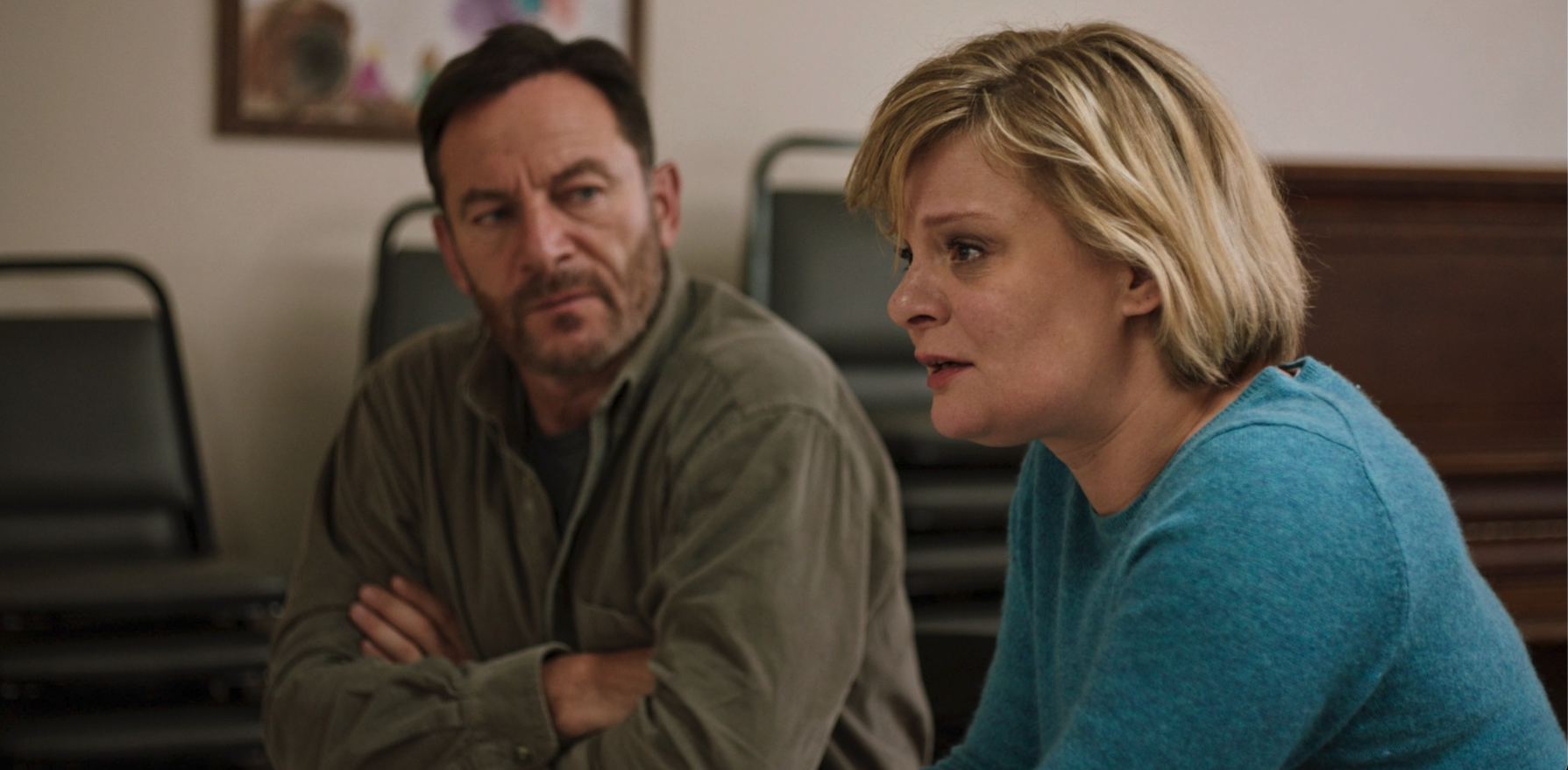
One table, four chairs, four grieving parents and an insurmountable weight of trauma to reckon with - the premise and presentation of Mass is simple enough, but this new drama from writer/director Fran Kranz makes the most of its talented cast to tackle a cavalcade of issues America is currently dealing with, but without offering any easy answers. On opposite sides of the table are Jay and Gail (Jason Isaacs and Martha Plimpton), mourning the loss of their child at the hands of a school shooter; and Richard and Linda (Reed Birney and Ann Dowd), the parents of the shooter. From the moment the four main characters enter the same room, Mass offers a complex array of emotional beats, both individually and by each pairing. Forced to reckon with their parenting choices and what they missed in their son's behaviour prior to the tragedy, Richard and Linda have to fend off accusations of negligent parenting whilst also hoping to use the meeting to find some way to move forward with their own lives.
The cast are all on superb form, with a reliably understated performance by Ann Dowd, in particular. What's most apparent though is that we've been starved of the talents of Martha Plimpton for too long. It's no criticism that she's spent the last two decades mostly working on television, particularly in the era of peak TV, but her roles have skewed towards comedy and procedurals, robbing us of the dramatic clout she offers here. Likewise, Reed Birney and Jason Isaacs as two very different father figures deliver fine performances, but the real gold is in the conflicting and often accusatory dichotomy between the two mothers. Plimpton's Gail states "Why do I want to know about your son? Because he killed mine", met with equally heartbreaking contrast by Dowd's Linda, "The world mourned ten. We mourned eleven".
With its chamber piece set-up (the action is mostly confined to their meeting room in the back of an Episcopalian church), Mass is unavoidably stagey, with four characters delivering monologues with occasional bursts of cross-table back and forth, to the point that it's surprising to learn this isn't based on stage work, but is instead an original script from Kranz. The stage-like tendencies are not a distraction per se, and the stripped back focus on the script and the performances even add weight to the subject matter.
Kranz - best known as an actor for his appearances in a number of Joss Whedon productions, most notably as slacker turned hero Marty in Drew Goddard's Cabin in the Woods - makes his directorial debut here, based on his own script, and it's a fantastic debut. Avoiding cliché and with vital commentary on the "thoughts and prayers" culture that has pervaded American culture in the wake of any tragedy, the film tackles gun control, the influence of violent video games, mental health and parental culpability, without portioning blame solely at anyone's feet. It's also capably directed without being showy, the camera only making slow, deliberate tracking moves around the table as the conversation flows back and forth.
A delicately handled, thought-provoking drama, full of remorse and regret, Mass makes a powerful statement on many core societal issues without relying on bombast. Kranz's smart script is expertly utilised by its talented cast to deliver a heartbreakingly vital drama for modern America.
Verdict
4/5
Mass screened as part of the 2021 London Film Festival. More information about the festival can be found here.
Friday, 15 October 2021
CANNON ARM AND THE ARCADE QUEST - London Film Festival 2021
One of the highlights among the documentaries at this year's London Film Festival was Mads Hedegaard's joyful Cannon Arm and the Arcade Quest, fresh from its debut at CPH:DOX and Hot Docs. Following in the footsteps of the almighty retro arcade doc King of Kong: A Fistful of Quarters, Cannon Arm and the Arcade Quest charts another plucky contender hoping to make gaming history by playing his favourite arcade game for 100 hours straight.
The gamer is question is the brilliantly named Kim "Kanonarm" Köbke - a nickname he's had since he first starting playing games in Danish diners in the 1980s - a mulleted Danish grandfather who loves listening to Iron Maiden and playing the classic arcade game Gyruss surrounded by his friends at Copenhagen's Bip Bip Bar. Already the holder of the impressive record of playing Gyruss (an outer space set shooter that sees you manouvre a space craft around the screen as you blast away patterns of stars) for 49 hours on one coin, his aim is to beat that record in honour of Thomas, a friend of the Bip Bip Bar who they lost to suicide.
The record attempt is not without its health risks, and although Kim is in decent shape for a man his age, people have died attempting similar endurance records, so his team of supporters have tailored a complicated score tracking system to make sure the game - much like the famed Donkey Kong kill screen - doesn't crap out on him and bring his record attempt to an abrupt halt. Starting off with 5 lives, the problem is he can technically accrue around 250 extra before the game errors, so he must keep track of how many he wins so he doesn't hit the top limit, but also, building up those extra lives so he can grab some much needed sleep for ten minutes or so is a crucial part of the plan. With his team monitoring the ever changing cache of lives, all Kim has to concentrate on is his scoring, keeping his eyes open, and hastily run to the garden whenever he needs to take a leak.
The comparisons to Seth Gordon's King of Kong are unavoidable, with its use of flash graphics and retro 8-bit sounds a major part of the fabric of both films, but director Mads Hedegaard doesn't shy away from acknowledging the existence of the former, even going as far as featuring a couple of the big names from that film and the world of arcade gaming. Both Walter Day from official video game scorekeepers Twin Galaxies, and the self-proclaimed "greatest arcade machine player" Billy Mitchell (who talks to Kim and his friends via telephone ahead of their record attempt, and before a cheating scandal sees him fall from grace in the eyes of his fans) appear briefly. But prior viewing of King of Kong isn't necessary to enjoy Cannon Arm and the Arcade Quest's own underdog story, with Hedegaard going some way to show why the quiet, unassuming Kim is such an unlikely but perfect subject for a documentary, and how his mind works when he's playing the game. If you do know your arcade gamers, needless to say that Kim is definitely more of a Steve Wiebe than a Billy Mitchell, and gains more of our support for it. As for Kim's team, they're a similarly unique group of gamers, more vocal and outgoing than Kim, doubling up as experts in the fields of music theory, physics and poetry in their every day lives.The documentary spends its first hour detailing the prep and training needed for Kim's big record attempt, before switching into its final act as Kim settles down in front of the Gyruss machine and gives us the kind of one man against the odds battle not seen since the finale of Rocky. It could be easy to dismiss the film and his record attempt as frivolous or unimportant, but as we hear the game play on and Kim's accumulation of lives fall away as he attempts to rest his brain for a few precious minutes, it's one of the tensest moments in cinema I can recall. Without spoiling the outcome of his record attempt, what I will say is that if you've ever had your own life-engulfing obsession that seems completely alien to most people, you'll find so much to relate to in Kim and his friends. Touching on mental health and finding the support you need from your friends, ultimately all these guys want is for their efforts to have a lasting impact in the world they call their own.
A gloriously fun journey into this outsider lifestyle anchored by a loveable group of misfits you can't help but root for, Cannon Arm and The Arcade Quest is undoubtedly the best snapshot of this subculture since King of Kong and a truly captivating underdog story. A strong recommend.
Verdict
4/5
Friday, 23 October 2020
HERSELF - London Film Festival 2020
Set around Dublin, Sandra has to juggle part-time jobs whilst also caring for and raising her two young daughters, sharing custody with the man who subjected her to horrific physical violence and emotional manipulation. Tired of living in the temporary accommodation at the airport that won't allow her to walk through the main entrance with the other guests, Sandra finds a solution in low cost housing by building a new home in the back garden of Peggy (Harriet Walter), a woman she cleans for who was close friends with her mother. Finding help from local builder Aido (Conleth Hill) and a small army of volunteers, Sandra spends her weekends secretly constructing her new home away from the gaze of her domineering ex, Gary (Ian Lloyd Anderson), and the housing authorities.
Starting off with a horrifically tense scene of domestic abuse (that only comes to an end when her eldest child runs for help, triggered by a secret codeword her mother has been forced to equip her with), what's most surprising about the journey Herself takes you on is how uplifting it becomes. Thankfully, this isn't a domestic abuse drama that lingers on physical violence, and although there's moments of gaslighting and coercive behaviour peppered throughout the film, for the most part Herself is about Sandra's journey to assert herself to those around her and slowly create a world that is safe for her and her daughters. In the lead role of Sandra, Clare Dunne might not be a name you will be instantly familiar with, but she's undoubtedly a star on the rise, having co-written the film with Malcolm Campbell and given herself a chance to show her acting range. In what's a nuanced, believable portrayal of a woman at her wits end dealing with bureaucracy of housing associations and the judgemental glares of other parents at the school gates, it's of no surprise to learn that Dunn has a stage background, including working with co-star Harriet Walter and director Phyllida Lloyd on the Donmar Warehouse's all female Shakespeare Trilogy. The supporting cast are all solid, including the two decent child performances of Sandra's daughters but the film completely belongs to Clare Dunne, who's in almost every frame and is completely magnetic on screen.
Far from a gritty, Nil by Mouth-style kitchen sink drama or misery memoir, Herself is not a film that lays it on too thick, opting for subtle beats in Dunn's behaviour to show her frustration at the system that seems keen to blame her for the situation she's in, not her husband. It also has something to say about the ridiculous logic of government welfare schemes when, in what seems to be a perfectly smart bit of reasoning that of course gains little traction, Sandra points out to the authorities that rather than spend €33,000 a year on housing her and her children, for €35,000 they could build low-cost housing for her that she could then pay rent back on. The film doesn't often go down the I, Daniel Blake route, but when it does, it makes compelling arguments for the need for changes to this system.There's a certain amount of wish fulfilment as friends and well wishers step in to help Sandra achieve her dream, but it's hard to be too cynical about a film that embraces its sentimental edges, and the sense of community spirit it has is infectious. Herself may have a shadow of darkness to it, but at its core is a pleasing, well delivered family drama, with a stand-out performance from Clare Dunn.
Verdict
3.5/5
Thursday, 22 October 2020
BLOODY NOSE, EMPTY POCKETS - London Film Festival 2020
Wednesday, 21 October 2020
NEW ORDER/NUEVO ORDEN - London Film Festival 2020
Without wanting to spoil how much a rug pull the film employs at its halfway point, I'll just say that the scenes that take place in the ten minutes after the inciting incident are some of the most violent and graphic I've seen committed to film, and even after the pace of the film and the action slows down, New Order gleefully shocks you with more disgusting acts of violence. The social and political commentary subtext is clear, and the punishments delivered will be all too familiar to some regions of the world, and all too close to becoming a reality to others. However, I find that the filmmakers have taken a misstep along the way, as although I cannot fault the performances of the core cast, nor the impact it has had, New Order is a film I find difficult to recommend.
The world we live in is increasingly on a knife edge, and although I am sure that the aim of director Michel Franco is to show that we live in a fragile society, and all people are fallible and capable of the worst things imaginable when pushed, he needed to take a stronger standpoint against the fascists to offer any sort of entertainment value, instead offering no discernible delineation between privilege, greed, and full-on nazism. This is extreme cinema that wants you to question what form of dehumanising violence is more stomach churning than the other, asking you to account for your own complicity when you change the channel if footage of war torn countries appears on the nightly news.
A powerful, troubling indictment of society's worst impulses it may be, but the despicable lack of regard for human life means New Order will stay with you like a stain on your memory. An incredibly difficult watch that you won't want to repeat again.
Verdict
2/5
Saturday, 17 October 2020
ROSE: A LOVE STORY - London Film Festival 2020
A low budget British indie with no notable stars, I went into Rose: A Love Story pretty cold, knowing only that there was some festival buzz around it, and it's turned out to be one of my favourites of this year's LFF. A curious mix of survival horror and sweet romance, it's a film that keeps its mysteries close to its chest, laying down plenty of intriguing ideas, visual clues (leeches in masonry jars) and genre motifs in its first half, before the introduction of a new character upends Sam and Rose's world and we start to see the harsh reality behind their choice to shut themselves off from everyone else.
The opening scenes, where Sam goes to confront the young man who's stolen from him, ratchet up the tension that's already at a respectable height after the dark woodlands setting has been established. Dangerously low on fuel to power their generator, Rose, working away on her typewriter, is plunged into a darkness that she seems welcome in, her adverse reaction to the sight of a small cut already showing us signs that she's no normal shut-in. When Sam returns to their home in the woods he's clearly scared of what he might be facing, but with a lockable safe room within their house, he has planned for all eventualities to make sure Rose is protected. Well, almost all. The second half of the film switches the set-up drastically, as the quiet, unsteady balance of their marital bliss is upset by the arrival of Olive Grey's Amber, caught in one of Sam's rabbit traps and in urgent need of medical attention. Reluctantly allowed into the home by Sam, he must weigh up if helping Amber is worth the risk to Rose's safety.
Rose: A Love Story succeeds in establishing the convincing coupling of Sam and Rose, in no small part due to the natural chemistry between Stokoe and Rundle that comes from their real life relationship. Both on board as producers and with a script by Stokoe, this is clearly a passion project of theirs, brought to life brilliantly by first time feature director Jennifer Sheridan. Having mostly worked in short films and TV as an editor, director and writer, this is an impressively assured debut by Sheridan, presenting an ominous mood that suggests the horror genre may be something she should explore again in the future. Likewise Stokoe, who's crafted a gruff, brooding calling card for himself as a writer and actor that will certainly serve him well.Making the most of of its remote, snowy surroundings (the snow apparently not by choice, but just the result of unexpected weather at the time of shooting), Rose: A Love Story taps into a feeling of isolation and fear of the outside world that feels all too relevant right now. And although the restricted focus of the film might leave some hoping for a grander finale than it's able to offer, there's plenty of simple, effective scares to enjoy in the preceding 90 minutes to make this a stand out offering for recent British horror filmmaking.
Verdict
4/5
Tuesday, 13 October 2020
ONE MAN AND HIS SHOES - London Film Festival 2020
Directed by Yemi Bamiro, One Man and His Shoes charts the rise of the Nike Air Jordan brand and the impact it has had on culture, leading to a demand that is so high, some people are willing to kill to get their hands on a pair.
Starting all the way back in the mid 1980s, when Michael Jordan was a fresh faced 6'6 college basketball player, Bamiro's documentary goes over some ground already covered in the Jordan sanctioned Netflix documentary series, The Last Dance, but after throwing its net wide to discuss the plight of a black community ravaged by crack cocaine and mandatory minimum sentences, One Man and His Shoes zeroes in on Jordan as an up-and-coming player chosen as the face of a new kind of sports shoe. Rather than being a standard sneaker that might be worn by other basketball stars (as was the case with Larry Bird and Magic Johnson), this would be a shoe bearing the name Jordan, designed for him and the legions of basketball fans who wanted to emulate his sporting prowess and own this coolest of status symbols.
In the first half of the film there's a great deal of effort put into explaining the perfect storm that lead to Jordan being picked as the player to wear the controversial first run of Air Jordans (they were banned by the NBA, not because they gave MJ an edge but because they weren't the regulation white colour, but that didn't stop fans from believing the former), and a ton of talking heads from sports writers, sneaker writers and marketing lecturers offer their take on why it was such a runaway success story, with sales expectations of $3 million after 3 years soon eclipsed when they made $126 million in their first year.
Much like the rise of Michael Jordan himself, it's a wild story that is easy to get swept up in, although the filmmakers know that a desire to dig into the varying designs and appeal of each model of Air Jordans is limited, but not completely absent, paying a visit to one collector who has 1175 pairs of shoes and other Jordan memorabilia worth over a million dollars in his house. Unsurprisingly, he doesn't share too much about where he lives. Instead this film shifts focus onto the darker side of the fervent fandom that goes with the launch of a new design, as huge queues wrap around department stores and purchase limits are put in place that mean not everyone who wants to buy a pair of new Jordans (and who can afford the hefty price tag) gets them, and so a resale market has emerged that sees the shoes go for thousands of dollars online, and worse, people assaulted and killed for their shoes.
It's of no surprise given the dark turn this film takes that there's no involvement from Michael Jordan, Nike, or key figures like Spike Lee - who hot off breaking out with his debut She's Gotta Have It, directed and co-starred in a series of commercials with Jordan that helped shape the brand's public image - instead putting grieving families as the focus of the final section of the film as shocking stories and footage of beatings and murders takes the place of on-court triumphs and the history of basketball endorsement deals. It's a bold swing that might shock audiences looking for a light-hearted documentary about sports shoes, but this film is more concerned with looking at the lasting effect this cultural behemoth has had on society, asking big questions about how much a billion dollar brand like Air Jordan and Nike should be held accountable for the criminal actions of consumers.
Like any great sports movie, One Man and His Shoes is not about sports, but it's unexpected how little it is about shoes too. Audiences expecting something light on its toes may be taken aback by the heavy pivot it takes, but it's a better film for facing up to the dark side of fandom.
Verdict
4/5
One Man and His Shoes is available now on the BFI Player
Thursday, 8 October 2020
STRAY - London Film Festival 2020
Switching gears to be a virtual festival, with screenings taking place at home on the BFI Player and some select films also receiving screenings at venues up and down the country, the BFI London Film Festival 2020 is now underway. One of the first films I was able to catch at the festival was Elizabeth Lo's documentary Stray, following the life of Zeytin, a stray dog living on the streets of Istanbul. With a camera always close by, Zeytin shows us a typical day in her life, weaving in between traffic on busy roads, drinking from fountains and crossing paths with other dog friends and adversaries along the way. Her closest allies are a group of teenage Syrian refugees who live on the streets and in derelict buildings, sharing a lot of similar problems and treated the same way by the authorities. The film doesn't present this as a heavy handed allegory, but the subtext is plain to see. When the stray dog population grew out of hand, the Turkish government enacted a controversial plan to cull most of the dogs, leading to protests that saw them change the country's law, making it illegal to "euthanise or hold captive any stray dog". This has lead to an uneasy truce that sees the dogs roam the streets as they please, almost as if it is their city and they are the ones allowing the human population to be there.
The concept of Stray is a simple but powerful one, telling a larger story via Zeytin's life. This could have quite easily been a documentary charting the refugee crisis and focussing on the homeless children that occupy the streets, but the choice to home in on a stray dog, and Zeytin in particular, has provided a richer world to explore and capture on film. There are other dogs in the story, namely her best friend Nazar and a Kartal, a puppy who has caught the eye of the teenagers; but for the most part the camera is never more than a few feet away from Zeytin, often racing to keep up with her lawless antics. The closest thing I can compare it too is Larry Clark's Kids meets that episode of The Simpsons where Santa's Little Helper runs away, although rather than fighting bears or saving babies from burning buildings, these dogs show off their freedom by digging through trash for food and humping in the middle of a women's rights march. A documentary with a clear message behind it, using Diogenes quotes to equate the respect that is shown to the dogs in contrast to the treatment of the refugees sleeping on the streets, it has to be said that if the message somehow falls flat, Stray also works as a hang-out movie, so engrossing it is to watch the different behaviours of the dogs and how they interact with one another. Even if you're not a dog person, you'll soon be completely enthralled by Zeytin's journey.
The camera is positioned no higher than dog head height at all times, giving a unique perspective on the world and a true sense of what it must be like to feel like to be ignored by society. The people around them are literally higher-uppers. We hear the sounds of the streets and eavesdrop on the conversations of passers-by and people the dogs choose to sit down next to, their words carrying like an echo, and for the dogs just another source of noise in their city. What's surprising is that even though the camera stays about 3 feet off the ground and shows the dogs facing a forest of human legs before them, what we do see of the city paints it as a vibrant, bustling place to be, full of visitors, workers, traffic and nightlife. It's unlikely to be used by the Turkish tourism industry, but this film captures the beauty of the area, as well as the uglier side in the treatment of the young boys sleeping rough on the streets.
Showing a daily routine like no other, Stray is an impactful, moving documentary that is expertly captured by debut feature director (also producer, cinematographer and editor), Elizabeth Lo. Tinged with a sense of sadness but also playfulness, it's hard not to be moved by the whole experience.
Verdict
4/5
Wednesday, 16 September 2020
WHITE RIOT review
Set against a backdrop of a rising right wing political ideology and how members of the punk, reggae and ska music scenes fought against it through the Rock Against Racism campaign, Rubika Shah's White Riot follows the creation of the Temporary Hoarding magazine by a group of artists and journalists, and the triumphant Rock Against Racism concert they organised when tensions were at their highest.
Although the Victoria Park Rock Against Racism concert is the main event, this is not in any means a concert film; in fact, the actual concert only occupies about ten minutes of the running time towards the end. Shah's documentary is more concerned with exploring the political atmosphere at the time that would necessitate the need for the concert, with the shameful views of Enoch Powell and National Front leader Martin Webster allowed on TV along with shows like It Ain't Half Hot Mum, Love Thy Neighbour and the Black and White Minstrel Show that went towards creating a nation of disenfranchised white youths, willing to blame people based on skin colour alone.
It's got a hell of a pounding, propulsive soundtrack, including The Clash's London Calling and the eponymous White Riot (band member Topper Headon is on hand to stress that the far-right faction that chanted along to the latter obviously didn't listen too closely to the lyrics), Poly Styrene of X-Ray Specs, Sham 69, and the now unfortunately, ironically named Tom Robinson Band. It makes no bones about outing the views a number of famous musicians aired at the time, with 'the great coloniser' of Blues, Eric Clapton spouting some horrendous racist remarks, and punk icon Johnny Rotten coming out of it pleasingly well by saying he "despise(s)" the National Front at a time when punk was readily adopting nazi uniforms and iconography.
But separate from all the celebrity musician interviews and footage of riots and protests on the nation's streets, the core of the film is the grass roots efforts of a small number of people, including the co-founder of Rock Against Racism (RAR) and the politics and music magazine that documented their efforts, Temporary Hoarding, Red Saunders. Saunders, a photographer and sometime performance artist, is the chief contributor to the film and documentary gold who put himself in the heat of the action serving as the frontman for the RAR campaign. Now in his 70s and sporting a mighty beard, it's the interviews with him that drive the film, whether it be rediscovering old issues of Temporary Hoarding that helped reach out to the youth before the NF got their hands on them, old TV interviews between him and Janet Street Porter or him posting letters in the NME telling Clapton what he thinks of him ("who shot the sheriff Eric? It sure as hell wasn't you"). The importance of Temporary Hoarding and the artists and writers who contributed cannot be understated, and even the punk aesthetics of the magazine have clearly been an influence on the visual design of this film.
As the film heads towards its finale, with prominent and influential musicians willing to attend protests (although it's noted that The Clash were "too cool to hold placards") and perform at the Victoria Park concert, there's the hopeful sense that the movement was winning out against the fascists, as can be seen be the sheer number of attendees to the pre-concert march from Trafalgar Square to Victoria Park. Saunders told the local council that they expected 500 people to turn up to the gig. Actual numbers vary depending on which person you speak to, but safe to say that number was eclipsed.
What's most concerning about Shah's documentary (that I first saw when it premiered at last year's London Film Festival where it won the Grierson Award), is that 40 years after the events of the film and in the 11 months since I first saw it, the issues it raises about right-wing rhetoric and the excessive force used against peaceful protesters by a biased police force have only become more applicable to our times. It was a topical film then, it feels vital now. It's not a film that's factoid heavy but that is unapologetically political, utilising its wealth of archive footage to show how the NF were able to gain traction among the youth of the day, but also how a combination of great music, truth and the power of protest can be an unstoppable force.
Verdict
5/5
White Riot is in cinemas from Friday.
Sunday, 3 May 2020
EMA review
This review was previously published as part of my coverage of the 2019 London Film Festival. Ema is currently streaming on Mubi and can be viewed here.
Saturday, 2 November 2019
MAKING WAVES: THE ART OF CINEMATIC SOUND review
Making Waves starts with a big idea that is hard to dispute. Sound is the first thing we're exposed to, in the darkness of the womb, making what sense we can of the world with the information we're given. It's not too big a leap to equate this to the experience of cinema, with storytellers like Spielberg, Lucas, Kubrick and Coppola name checked as creative pioneers who understood the importance that sound was to their films. That might sound like an obvious statement (as Ang Lee states in the film "movies is sight and sound"), but by charting the history of cinema this film digs deep into how the art of cinematic sound has expanded its role.
Within the first few minutes of Making Waves, we're introduced to talking heads from Walter Murch, Ben Burtt and Gary Rydstrom, three hugely important contributors to how we experience sound at the movies; and they're just the tip of the iceberg for this film, which has an astonishing line-up of key industry figures on show. The film is largely split into two distinct chapters, firstly following the emergence of sound in cinema from the days of silent film to the introduction of sync dialogue and "talkies" in 1927's The Jazz Singer, and right up to the use of digital sound editing techniques in The Matrix and Pixar films that use numerous layered tracks to create this orchestra. Then the film pivots to be an in depth breakdown of every facet of the "Circle of Talent" that creates what we hear when we go to the cinema; so if you've ever wanted to know what ADR is, here you go. Understanding all these different areas of expertise can be a bit overwhelming, so the film uses some helpful on screen graphics to illustrate each discipline which seem daunting enough to make you wonder why anyone would want to make anything as labour intensive as a film, let alone a big budget blockbuster.
During the first half of Making Waves, there's a sense that with the focus on Walter Murch and his work with Francis Ford Coppola and George Lucas at American Zoetrope, that we're headed to one film in particular; Star Wars. This actually comes surprisingly early into the film, with the Oscar winning achievements of Ben Burtt well documented (answering the question of what a Wookie sounds like by recording and manipulating the many noises of a bear). It was a given that Star Wars and the Star Destroyer roaring into frame was going to be a feature of this film, but what's surprising is the other films that played an important role in how we experience sound at the cinema today, chiefly the pivotal role Barbra Streisand and her version of A Star Is Born played in introducing stereo sound to cinemas.
There's a danger to films of this ilk that they become 'Film Studies for Beginners' whilst also largely appealing to people who've already studied it. Although there's a certain degree of that when covering the history of the medium, there's also genuine insight from professionals that you won't hear anywhere else that's sure to leave you with the burning desire to immediately re-watch an ever expanding list of cinematic greats. The enthusiasm for their craft is clear, and it's easy to be in awe of their achievements.
Listen up. Making Waves is not only a must see for film fans, it's a must hear.
Verdict
4/5
Monday, 28 October 2019
HONEY BOY - London Film Festival review
Honey Boy follows the life of young actor Otis across two timeframes, as the older incarnation uses his time in rehab to reassess his childhood and the volatile relationship he had with his father.
I would say that Honey Boy is loosely based on the life of Shia LaBeouf, but within seconds of the film's introduction to a 22 year old Otis (Lucas Hedges), performing a stunt on the set of his latest big budget action film (and complete with a nod to LaBeouf's often mocked "no, no, no, no, no" approach to line delivery), it's clear that, with the exception of the names of the main characters, this doesn't stray too far from the truth. To remove any doubt, the film then launches into a montage of the young Hollywood star's hedonistic lifestyle, culminating a car crash that leaves the actor with severe injuries, much like LaBeouf's own accident during the production of Transformers 2 that almost cost him the use of his hand and required major surgery to fix.
Entering rehab to work on his drink problem and the PTSD from his accident, Otis is tasked by his therapist (Laura San Giacomo) to keep a journal as part of his recovery, something that sends him, and the action of the film, back to his childhood in 1995 when he was starring on a kids TV show. Chaperoned by his braggadocio father James (Shia LaBeouf in a not too convincing balding hairpiece), Otis learns how to grow as a performer from James, a combat veteran and former rodeo clown with endless cheesy one-liners that impress no-one but himself. A recovering alcoholic who's displeased at having to live vicariously through his more talented son, James is a domineering, selfish, often abusive jerk towards his son. It's too LaBeouf's credit that despite all this, the relationship between Otis and James is one you want to see succeed, and touched with moments of sweetness, such as when they hold hands as they approach a taco stand, only breaking contact under the threat that someone might see them and misinterpret their affection.
Director Alma Har'el, best know for her documentaries Bombay Beach and LoveTrue that openly blended fact and fiction to create scenes of magic realism, makes her narrative feature film debut here by bringing her established style to LaBeouf's extremely personal script. Once the enfant terrible of young Hollywood with some performance art projects that were met with much sniggering derision, after a few years in the wilderness LaBeouf silenced a lot of his critics with his role in Andrea Arnold's American Honey and his method intensity on David Ayer's Fury, permanently scarring his face in the pursuit of a realistic war wound. Playing what is a thinly veiled approximation of his own father here, he delivers an often bombastic performance that could veer into caricature if not for the grounding influence of his scene partner, Noah Jupe, as the 12 year old Otis. The scenes between the two of them that take up the bulk of the story are often loud, vindictive shouting matches and with a constant fear of what might happen to the young Otis, but LaBeouf's script, although not short of dramatics (one stand out scene places the 12 year old Otis on the phone, acting as the go-between for his warring parents by mimicking their voices as he relays their hurtful messages to one another), stops short of feeling like a misery memoir.
Under Har'el's direction, Honey Boy lets some touches of dream-like fantasy come into play as the film heads towards its climax, but the earlier sections are all about raw human drama, and although Hedges's scenes are far outnumbered by the extensive flashbacks, the damaged masculinity he offers is unlike anything I've seen him take on before, with his older Otis bridging the gap between his younger self and the lingering cloud of his father. In a strange way, although this film is LaBeouf's story on screen, and you will undoubtedly leave the film with a new appreciation for how he's found a way to process the unresolved traumas of his childhood as an actor and the relationship with his father, the most crucial piece of the puzzle is the performance of Noah Jupe as the younger Otis, who delivers the best performance of the film by no small margin.
To some this could be too easy to dismiss based on your feelings towards Shia LaBeouf and his somewhat erratic persona, but Honey Boy is a raw, emotional, deeply personal story that is pleasantly, gratifyingly moving.
Verdict
4/5
Wednesday, 23 October 2019
NOCTURNAL - London Film Festival review
I'll preface this review with a warning that potential spoilers may follow about the plot of the film. I say 'potential spoilers' as I'm not sure whether the big reveal of the film is meant to be a mystery to the audience at all, because to me it was blindingly obvious from the moment Pete set eyes on Laurie that he's the father that wanted nothing to do with her when Laurie's mother (Sadie Frost) fell pregnant. It's something that isn't "revealed" until then end of the second act, but every preceding scene between Pete and Laurie is spring-loaded like a jack in a box with Pete desperate to tell her the truth but without the emotional maturity to do so.
I would say that despite this frustrating element of the film there's still plenty to recommend, chiefly the performances of the two leads. As a show of acting skill, both Jarvis and Coe should be commended for delivering compelling performances that are better than the material they're working with. With this and Calm with Horses, Cosmo Jarvis is carving out a niche as a loveable lunkhead with questionable decision making abilities. He's fantastic in the film, as is his co-star Lauren Coe, but it's a shame the film is plagued with logic issues that render some of the more dramatic scenes a bit laughable. The film builds and builds towards the reveal you know is coming, but boy, the way Pete reveals his big secret to Laurie is staggeringly thoughtless, even for a character who's unable to articulate his feelings.
Worth seeking out for the performances, Nocturnal has all the hallmarks of a gritty relationship drama and is attractively shot for the most part (don't film your characters in front of a huge window and not expect the camera crew to be visible), but has flaws in its believability and execution that are hard to ignore.
Verdict
2.5/5