Screened at the London Film Festival, the new documentary Bad Reputation follows the career of the iconic lead singer of The Runaways, Joan Jett.
Not the most conventional subjects for a documentary, Bad Reputation follows suit with a different approach to telling the story of Joan's life and career. Her time with The Runaways and volatile relationship with one time lead singer Cherie Curry (as portrayed a couple of years ago by Kristen Stewart and Dakota Fanning in the film of The Runaways) is only the jumping off point for this documentary and is covered within the first few minutes. This film, instead, tells Jett's story after the band had gone and she was blazing a path on her own.
It's indisputable that Jett is a living legend, and a popular one among musicians, lining up to tell anecdotes about her. Chief among them are Iggy Pop, Billie Joe Armstrong, Debbie Harry and Chris Stein and Kathleen Hanna, all happy to shed light on this mysterious and guarded rock and roll figure. There's a number of great moments discussed, from her run-ins with former manager Kim Fowley (described by Iggy Pop as "Frankenstein if Frankenstein was on crack") to hooking up with the 90s Riot Girl movement led by Kathleen Hanna, in many ways the next generation Joan Jett.
Yet despite her being held in high reverence, where the doc falls down is the failure to even try to crack Jett's steely exterior. This is one of those docs that's officially endorsed by its subject, and whilst Jett should be held in high regard, it's clear that there's many avenues that have been left unexplored, presumably due to the demands of Jett and her management. A warts and all biography was never needed, but some more insight into Joan's personal life would have benefitted the film. The bizarre odd couple relationship she has with sometime producer and friend Kenny Laguna obviously has a lot more to it than has been allowed to be told, and in the rare interviews she has with him present he is able to draw a different side out of her. There's nothing wrong with a star of the stature of Jett being protective of her personal life, but the lack of exploration here shows that the whole film has been carefully crafted under her guidance, and is quite benign as a result.
There's still some gems in the archive, like the scenes from Light of Day, the film she made in the 1980s with Michael J. Fox (I need to track that down), and her musical performances have a real energy to them; but as documentaries of rock and roll icons go, this is never more than serviceable.
Arriving in a storm of hype about Nicolas Cage's performance, Panos Cosmatos's Mandy screened as part of the London Film Festival and is now on general release.
The first thing to get out of the way is that 'Mandy' is not a film, but rather two, bisected down the middle and separated by a title card bearing the film's name, bleeding onto the screen an hour in. The first part, shown to be called 'The Shadow Mountains, 1983 A.D' is the starter before the main course of Cage led mayhem, and the set up for what is to come. Cage appears fleetingly and has a passive role, the focus (perhaps confusingly, given the title) is on Andrea Riseborough's Mandy, an illustrator and the wife of Cage's lumberjack, Red.
When a religious cult leader and a gang of demonic bikers arrive at their door, Mandy is subjected to Jeremiah's (Linus Roache) rhetoric, some mind expanding hallucinogens and some Carpenters on vinyl. What is most surprising about this section of the film is how slow and trippy an experience it is. Even before Roache and the Hellraiser-esque bikers turn up, Red and Mandy's home life is shown to be darkly ethereal, their bedroom surrounded by huge windows that connects them (spiritually and literally) to the woods outside.
With its array of kaleidoscopic colours and some truly retina expanding visual trickery (most notably in a cross fading conversation between Riseborough and Roache) you find yourself pulled into its trance like nightmare as all manner of horrors wash over you. It's not an altogether unpleasant experience, but if you aren't fully invested in what's going on, it may have the effect of being read a bed time story by someone on a heavy acid flashback.
The film has a clear change of gears when the Cage door is finally opened, fuelled by rage and a secret bottle of bathroom vodka, it's in this back half where all the crowd pleasing moments lie. At this point in his career, Cage has become known for his on screen madness, and although Mandy does contain some vintage Cage-isms including a neck snapping scene that elicited a spontaneous round of applause in the screening I saw, it's just a drop in the ocean of crazy Cage supercuts and far from the unhinged madness word of mouth would have you believe. It's in this second half where the film leans into its sick sense of bizarre humour, not least the very strange appearance of the 'Cheddar Goblin' that, although funny, doesn't meld well with the psychotropic world we've been invited into. It's as if they have hit upon a 'viral' moment by accident and have opted to include it, even to the potential detriment of the film's established world logic.
As the saying goes, actions speak louder than words, which is helpful as Cage's Red is definitely more of a do-er than a talker. A lumberjack by trade, when he begins his revenge mission with arrows that will "cut through bone like a fat kid and cake" and a huge, self-forged axe, the demonic forces he faces better watch out. The film makes no excuses for its macho-ness and when Cage is at loggerheads (yes, that's a lumberjack pun) with the demonic bikers, Mandy includes a chainsaw ballet complete with the most audience appetite whetting reveal this side of Crocodile Dundee's knife.
It's worth investing in the film's trippier first half to get the pay off when Cage is set loose. A disturbing, psychotropic nightmare of visual mayhem, despite some flaws in its pacing and logic, Mandy is an experience like nothing else.
One of the sweetest and most peculiar films of the festival, Papi Chulo stars Matt Bomer as Sean, a local weather man who, when forced to take some time off work by his employers to deal with his emotional issues, befriends Ernesto (Alejandro Patino), the Mexican day worker he hires to help repaint his deck. Deciding to leave the work till another time, Sean takes Ernesto on day trips, rowing across a lake or hiking in the hills, much to the befuddlement of Ernesto.
A simple man looking to provide for his family, Ernesto's story is a familiar one. An immigrant, he waits outside the hardware stores along with other workers, waiting to be picked up and used by the upper middle classes as cheap manual labour. It's here that after an on air sobbing fit that required him to take a leave of absence, Sean picks up some paint from the store and Ernesto to help do the work, and either due to his desire to be liked or white liberal guilt, he over-compensates by offering Ernesto drinks and buying him lunch in a manner that makes Ernesto uncomfortable. Sean, a successful gay man with a good career, on the surface lives a drastically different life to Ernesto, but they eventually find some sort of bond despite their different lifestyles.
Matt Bomer has always been a likeable actor, clearly born to play Superman on screen but never given the chance to do so (although he did voice him in the animated Superman: Unbound). Playing man going through an emotional breakdown and mourning the loss of his relationship with boyfriend Carlos, he tries to hold on to the things he holds dearly, calling Carlos's cellphone to leave him messages. It's a bold, moving, deeply tragic but comedic performance from Bomer.
There's a whole heap of things this film comments on. Firstly, the use of cheap labour from across the border by successful white urbanites is nothing new, but here, as Sean uses Ernesto as his sounding board and stand-in therapist he takes things to a whole new arena. After all, $20 an hour is cheaper than hiring an actual therapist. There's also something deeply psychological about Sean hiring a Mexican worker to essentially act as a stand in boyfriend in place of his former beau, Carlos. Freud would have a field day with Sean's psyche. Although it appears that social companionship is Sean's aim, there is something about the curb-side appropriation of a worker that has echoes of prostitution, and this does seem to be a particular commentary on a familiar LA tradition. Just a reminder that this is a comedy at heart, but one that knows there is an inherent issue in it subject matter.
Alejandro Patino is fantastic of Ernesto, finding the balance between grateful employee and passive acceptance that, despite the odd scenarios he keeps finding himself in with Sean, at least he's earning money. As the story goes on, it's also clear that Ernesto is starting to enjoy himself in this bizarre Pretty Woman arrangement, without the sex, of course. There's a comedy of awkwardness between this new odd couple that doesn't go unnoticed by onlookers, pointing out that they have "a Driving Miss Daisy thing going on", which only makes Sean's over-compensation spike more. In one particular scene, Ernesto's wife gets to meet the strange American man that's been paying for her husband's company, and although the set up is one born of tragic desperation, at least she's able to see the funny side of things.
The success of this film rests solely on the charm of Matt Bomer and his interactions with Ernesto. As an unlikely pairing as they may be, the friendship they develop is incredibly sweet. One of the film's standout scenes sees Sean and Ernesto break the language barrier, riding in a taxi home singing along to Madonna's Borderline, the joy of the song and the relevance of the title not lost on either of them.
An unconventional bromance with terrific performances from Bomer and Patino, Papi Chulo is a film that may have been made on a low budget, but manages to succeed by getting its characters right, surpassing any budgetary limitations with genuine heart.
With just three days left on his probation, Collin (Daveed Diggs) sees a young black man gunned down in the street by a police officer (Ethan Embry). Knowing that speaking up about what he saw may jeopardise his imminent freedom, Collin turns to his friend Miles (Rafael Casal) to be his council and to keep him out of trouble. Unfortunately for Collin, the volatile Miles, frustrated by their increasingly gentrified neighbourhood and the injustices he sees around him, is a powder keg ready to go off at any moment.
Best known for his role in the original production of Lin-Manuel Miranda's Broadway phenomenon Hamilton, over the last few years Daveed Diggs has been building a list of TV credits (Unbreakable Kimmy Schmidt, Black-ish, the upcoming Snowpiercer TV series) and onto the big screen with this, written and produced by himself and co-star Rafael Casal and taking place entirely in his native Oakland, his most personal role to date. A commentary on the gentrification that is happening in many predominantly black neighbourhoods, Collin and Miles work for "Commander Moving", literally making a living by helping to take residents out of the area to make way for new hipsters to move in.
Whereas Collin is willing to bite his tongue and just wants to see out the time remaining on his probation (his jail time the result of a violent attack he was a part of when working as a doorman), Miles, a white man who was also born and raised in the area, is more vocally against the encroaching threat and feels something needs to be done to claim back the area they call home and stop their culture from being appropriated. This is most obvious in the scene where Miles and Collin end up at a hipster party where the new owner of the house is now sporting the same neck tattoo as Miles, leading to Miles violently lashing out when his credibility is called into question by a fellow Oakland resident.
Blindspotting has a number of funny moments coming from the relationship between Collin and Miles. It is a buddy comedy of sorts and feels like a throwback to other knockabout comedies like the Friday series (even Collin's hair has a 90s vibe to it, worn long and braided), particularly in the earlier scenes of Miles hustling his way around town selling old hair straighteners and sail boats, although its political concerns are more contemporary. In one of the most thought provoking scenes in the film, we see a heated interaction between Collin and Miles about what racially charged words the white Miles is allowed to use in reference to Collin, a black man. It's an interesting and well played argument that Miles, uncomfortable using the N-word, still struggles to see why he can't say it, and understand that although they may be from the same neighbourhood, Collin's world is different to his. Miles, a danger to himself and others and stupid enough to have a gun on him, does not understand the privilege he as a white man has to act out and do stupid things without the same risk of police reprisal or serious jail time Collin would face. It's a great summation of the racial politics of the film that highlights the difference between them as seen by society, and crucially the police, and superbly acted by Diggs and Casal.
For the most part it works, and the slightly jarring feeling you get when Diggs starts to break into verse (making use of the skills he became known for in Hamilton) are gone by the film's emotional climax where he uses his powerful vocal delivery to confront the brutality that has been plaguing him for the film. As is to be expected for a story so focused on the relationship between Collin and Miles, the female characters are left largely in the background, which is a shame as there's some interesting dynamics that could have been better explored, particularly with Miles’s family life.
When viewed as their separate elements there's so much to admire about Blindspotting, but collectively these tonal shifts make the film an occasional uneven ride. Its success is largely dependent on the chemistry and friendship that Diggs and Casal have on screen together, and carries a message that goes much deeper than you'd expect.
Directed by her former St Martins College classmate, Matangi Maya M.I.A digs into the outspoken pop star's personal history, from early beginnings in Sri Lanka to arriving back in the UK in the early 90s as a refugee, and finding herself through music.
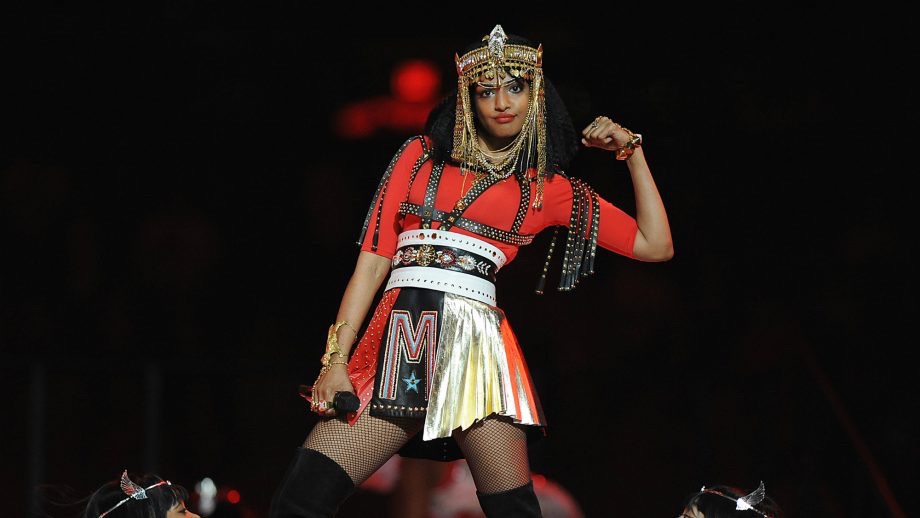
If all you know about Maya is her single Paper Planes (which was everywhere in 2008) and her controversial appearance during Madonna's half time Super Bowl show (where she extended her middle finger towards the camera and gave conservative America a new target), that's probably not entirely your fault. Although she is probably one of the most politically outspoken pop stars there has ever been, what may not be known is much about her as a person, partly down to pop star mystique and partly due to her insistence on controlling her own image. Raised in Sri Lanka where her father was the founder of a Tamil resistance group, she and her siblings had to flee to the UK with their mother when the situation got too dangerous. It was here in the UK where she cultivated her eclectic love of musical styles, taking influences in like a sponge.
With its VHS footage of her dancing in her teenage bedroom, it's almost too easy to say this film's early scenes share a lot of the DNA of Asif Kapadia's Amy, where Maya discovers herself and her western identity through a love of music, and also of recording herself. Originally planning on having a career as a filmmaker, this documentary is composed of the hours of footage Maya recorded in her teens and twenties, handed over to director Steve Loveridge to compose this montage of her life. It's in this footage where she reveals many surprising points about her life, including the mind boggling involvement of Justine Frischmann from Elastica in shaping her early career as a visual artist. It's also clear from the footage that 16 year old Maya was destined for two things, to be a star and to be an activist.
The film takes all of these pivotal moments in Maya's life and remixes them, for example following her album of the year award win in the early 2010s is followed by a jump back to her travels to Sri Lanka in 2001. It hammers home the context of how far Maya came and the things she saw that sculpted her career as a bad girl pop star and activist. There's a powerful political tone to the film, with the troubling treatment of Maya by the mainstream American press in a time of rising right-wing ideologies, accusing her of supporting terrorism and hounding her out of America after she 'flipped the bird' on live TV to millions.
If there's anything outrightly negative to say about the film, it's that it's a few years too late to carry the cultural relevance it wants. It would unfair to imply that Maya carries no cultural cache, as that simply isn't the case; but she is not the cause celebre she once was and the film's urgent social and political commentary may arrive somewhat muted by missing out on M.I.A's huge wave of popularity. Hopefully this doc will re-establish her as a vital act, as this proves above almost anything that the strong willed and ferocious Maya/M.I.A is the kind of pop star the world needs.
Directed by Eugene Jarecki and produced by Steven Soderbergh, this new documentary travels around some of the key places in Elvis Presley's life, asking a number of well known faces their opinion of him and his legacy and exploring his celebrity as a metaphor for the story of America.
Documentaries about Elvis must number into the hundreds, all treading over the same highs and lows as the previous. It's refreshing then that The King isn't really a film about Elvis at all. Sure, it's called The King and Elvis is the central figure in the film, but Jarecki, most known for his deep dives into political and social injustices Why We Fight and The House I Live In, goes out of his way to explore beyond the boundaries of that one man. Using an old Rolls Royce that Elvis once owned as a time capsule/time machine for a number of fans and detractors, Jarecki captures some candid and controversial opinions about the man they called The King and the country he called home.
The participants range from those closest to him ("Elvis was my best friend. I don't know if I was his best friend, but some days I was"), to child stars like Emi Sunshine, raised in his long reaching shadow, to the incredibly honest Chuck D who, in a frank discussion of Elvis's racial appropriation, says that Elvis's success was down to him "selling a black style with a white face". Ethan Hawke is another famous face who is honest about his own wavering admiration of Elvis, along with Ashton Kutcher whose personal reflection on the nature of celebrity is interrupted by celeb spotters passing by on a tour.
Spiked with a number of musical performances, this candid commentary which is presented fairly and even-handedly by Jarecki, is sure to ruffle some feathers among the hardcore Presley fans who, even in 2018, easily number in their millions. The question surely is, on a scale of casual appreciation to Vegas-era jumpsuit owner, what level of Elvis fan will this film appeal to? To be honest, although it may not be saying anything that hasn't been said before and is not the muck raking it first seems, this appreciation/vilification will anger hardcore fans, even if their voice is represented in the film. So why make such a brutally honest film? Well, Jarecki is only mildly concerned with telling Elvis's story. It's the important cultural and political milestones that he lived through, and the current state of America that Elvis hasn't witnessed that are Jarecki's focus.
Chief among the political milestones mentioned is the civil rights movement that, as evidenced here, Elvis stayed noticeably quiet on. Given his musical tastes and clear appreciation of black culture, some of the commentators don't hold back on chastising Presley for not using his influence for good when it mattered the most. Filmed during the run up to the US election, it is obvious that the narrative of this film has been found in the editing process, post November 2016, with many choice soundbites ringing as loud as one of Elvis's greatest hits, "If Elvis is your metaphor for America, we're about to O.D.". Another statement (that he should have known would come back to haunt him) comes from Alec Baldwin, who whilst riding in the back of Elvis's Rolls Royce through the streets of NYC, firmly states that "Trump is not going to win". The duality of Elvis's Las Vegas residency leading to his demise and Trump's rise through Las Vegas Casino and hotel ownership is not lost on this film.
Elvis is undoubtedly a key totem and as American as apple pie and Route 66, but despite many troubling parallels it's not always the easiest sell to claim that his charismatic rise and eventual bloated fall are indicative of America's ongoing issues. There's a sense that the film is aware that it's pushing the boundaries of what it can achieve with this conceit, but you have to commend Jarecki for exploiting and exploring the most obvious parallels, delivered with a wink towards the camera that seems to hope that America can learn from the tragic lessons left behind by one of its most famous sons.
A compelling and well crafted piece of filmmaking, The King is an Elvis documentary that's not just for purists; in fact, an ambivalent view of the man and his legacy may give you tickets front row and centre for this show.
Out now on VOD is the story of washed up rock star Jimmy Kleen (David Arquette), coming out of retirement for one more shot at glory with guitarist Scott (Ryan Donowho) and singer Rachel (Allie Gonino) as a new frontwoman for his band. She's beautiful, talented and electrifying on stage, but it may also be her who's leaving a trail of bodies in their wake.
It's hard to pin down exactly what's wrong with Hollow Body, but let's start with the ridiculous set up. Following a bout of crippling stage fright at the first gig for Jimmy's new band, shy, introverted lead singer Rachel and her mother get struck by lightning when leaving the venue. When Rachel survives, she returns to the band a new woman, finding her inner rock goddess to the delight of audiences and potential record executives. But something weird is going on at their venues, with reports of heart attacks happening to people who've been in contact with Rachel and charred corpses piling up.
As well as starring as Jimmy, Arquette also acts as narrator, giving his lines all the gusto Harrison Ford did when he was contractually obliged to provide the voiceover for the original version of Blade Runner. He's possibly going for jaded LA aloofness, but he seems uninterested in trying to add shape to this very strange film. He's much better in person (although he's not the easiest sell as a burnt out rock star, even with the grey hairs he's gained since his role in the Scream franchise) and Jimmy is the central character in the film, but the decision to not put Rachel as the central figure seems like an odd choice, particularly as it only seems to be to maintain a sense of mystery around her and preserve the reveal you know is coming an hour before it does. When the twist that isn't a twist gets revealed as the film enters the final act, you'll be left scratching your head trying to work out why the characters took so long to figure it out, even if it doesn't make a lick of sense.
As Rachel, Allie Gonino makes for an appealing front woman, but post accident the film never really reconciles her character and Gonino isn't given the opportunities to add anything more than surface rock chick cliches. Ryan Donowho's Scott suffers similarly from a lack of development, despite being given a wife and child and conflict with his feelings for Rachel. There's some chemistry between them, even after her total persona overhaul, but to be truly compelling their story needed more... electricity.
It's also worth noting that the promotional art overstates Luke Wilson's involvement by some degree. He may share equal billing and half the artwork with Arquette, but it's really more of an extended cameo appearance. As the record company mogul who is the key to the band getting signed his role may be quite important, but he's on screen for what must equate to less than five minutes when added together.
It's a Jennifer's Body-esque body horror, but doesn't lean far enough into that aspect of the story to be satisfying. As Rachel becomes a glowy-eyed serial killer I was hoping the story was finally about to find its edge. Rachel could easily have become a bad-ass rock chick looking for retribution and to redress the balance against the men that have objectified and taken advantage of her in the music business, but that commentary is absent or just doesn't land, with her acts of violence instead done self-servingly and without any clear reason.
On the plus side, the band performances and songs are surprisingly decent, and I get the feeling that the film is a lot lower on the budget scale than it would first appear; but in terms of basic storytelling the secret behind the twist should also have a bigger impact on the film than it does, and the whole narrative concludes with a fizzle rather than a bang. There may be a spark of a good idea in there somewhere but ultimately Hollow Body lives up to its name.
Newly re-issued on blu-ray is the classic punk documentary, D.O.A. A Right of Passage.
Shot by Lech Kowalski, D.O.A. followed the Sex Pistols on their notorious 1978 tour of the USA (their last before the filthy lucre tempted them back in the 1990s), as well as document the punk scene that was thriving in the UK in their absence, with bands such as X-Ray Spex, Generation X and Sham 69 all making waves. Added to that, this film heavily follows Terry Sylvester, frontman for Terry and the Idiots, for whom this film is their moment in the spotlight.
It all starts calmly enough, the quiet before the storm at an Atlanta performance by the Sex Pistols attended by the local youth hoping to see the much hyped new big thing over from England, before erupting into Anarchy in the UK, the lyrics appearing on screen and updated to appeal to the American crowd. Following the performance the camera gets instant reactions from the audience, some loving it and some hating it with opinions ranging from "revolutionary" to "garbage". Either way, it would be hard to imagine that both groups aren't still talking about it to this day.
There's a lot to be said about the Sex Pistols and their commodification by Malcolm McLaren in a way that seems to be the antithesis of what they supposedly stood for. This film captures some of that madness, and the capitalist hypocrisy within the fashion world that ran concurrently with the scene. The Pistols' music and attitude managed to speak to disaffected youth on both sides of the pond and was genuine from the point of view of the band members. In particular, Sid Vicious and his relationship with Nancy Spungen and struggles with drug use play an important part in the film. These are some of the hardest scenes to watch as Sid is near catatonic throughout, their sad story ending with some on screen text to say what happened to Sid and Nancy after filming had finished.
Back in England, with Mary Whitehouse's "anti smut crusader" (as she's billed here) going on tv to talk about how worried she was about the children of the time, the punk scene was thriving with fantastic live performances by X-Ray Spex and Sham 69 caught on camera. There's also Terry from Terry and the Idiots reading out his banana bread recipe for our enjoyment, so a lot of bases are covered. The documentary cross cuts between locations on both sides of the Atlantic and speaks to a lot of audience members expressing their feelings of resentment towards the older generation. D.O.A. shows that a lot of things are universal, and given nearly 40 years of hindsight, are also timeless.
D.O.A. A Right of Passage may be a documentary about punk, but in its presentation is it a punk documentary? Passive observers for the majority of the performances, the one occasion where the documentarian's question is audible, asking an unruly youth with a giant X on his face at a Sex Pistols gig "what do they sing?", ends up with them being spat on. The smartest thing director Lech Kowalski chose to do was not just focus on the Sex Pistols as his subject, although this was possibly a choice made out of necessity due to how hard it would have been to capture usable footage from within their concerts and the guardedness of many members of the group. The inclusion of other bands of the era, including ex-Pistols member Glen Matlock's Rich Kids (featuring a young Midge Ure who contributes a lot to the additional documentary found on this disc), The Clash and Sham 69 in addition to the many vox pops and on street interviews helps to give an overall snapshot of the punk scene as it was.
It's a nice, polished upgrade that looks clean, but not too clean given the conditions it was filmed in. Unlike a lot of the key figures involved, the film (shot on 16mm) has aged gracefully and isn't showing too many signs of its age, including in its scattershot structure. Documentaries covering live music or bands on tour tend to follow a strict narrative pattern that's become somewhat predictable, so it's nice to see that to go along with its punk subject, D.O.A. is appropriately unfocused and unbiased on which bands should receive the most attention and at what point to cut off a live show.
One of the great documents from the punk era that truly managed to capture a little bit of magic and raw intensity from the scene, rather than being dead on arrival, D.O.A. A Right of Passage makes its blu-ray debut looking as alive and vital as it ever did.
Verdict
4/5
Special Features -
- Dead on Arrival: The Punk Documentary That Almost Never Was. - An in depth contemporary documentary that tracks the creation of the original documentary, offering new insights into the filming process and the punk scene as a whole.
- A Punk Post-Mortem. - Interview with co-writer Chris Salewicz
In recovery from a heart attack, ageing Hollywood playboy Atticus Smith (Jeremy Irons) and his estranged son Adam (Jack Huston) make their way across country to a family wedding. Could this be the bonding experience both men have been in need of?
The film starts with Irons's Atticus receiving a lifetime acting achievement award where he belittles the ceremony and proclaims that "there's life in the old dog yet". This is swiftly followed by a heart attack that threatens his ability to attend his daughter Annabelle's (Mamie Gummer) wedding on the other side of the country, and his upcoming role of God in a movie called "God". Unable to fly in his condition and forgoing his surgery until after the ceremony, it falls on Adam to escort his tearaway father across country to the wedding in order to keep him alive and out of trouble. Under strict order to behave himself, Atticus continues to drink, smoke and party like a horny teenager with something to prove. As Ben Schwartz's suffering agent puts it "he's a cocksman", and he's not going to let his reputation down.
Jack Huston (himself part of a Hollywood dynasty) plays Adam, a sometime college professor and feminist documentary filmmaker who has no time for his father's ways and the celebrity that Atticus milks for all he can get. Friction between them stems from Atticus being an unapologetic serial womaniser who blamed the breakdown of his marriage on his son for snitching on him rather than his own actions, but when forced into close proximity with his adult son Adam, he starts to realise that he may have passed up the role of a lifetime... Dad.
On the list of legendary Hollywood bad boys who slept their way around many a film set, you wouldn't immediately picture Jeremy Irons as a member of the club. This is the kind of role you can imagine getting offered to Jack Nicholson back in the day, and perhaps would have benefitted from having someone in the role who wanted to play with his public persona as something of a playboy and with more in common with Atticus's lifestyle. However, there's no doubt that Irons has dove head first into this role, and his portrayal has a certain English charm to offset the rampant misogyny that others couldn't offer.
An Actor Prepares suffers from a title that bears no clear relevance to the story within the film, which would have worked just as well and possibly better if he were a fading rock star of some sort rather than an actor. They even start their journey in a huge, luxurious and spacious bus, the likes of which you could picture Aerosmith travelling in when on tour. It's quickly ditched in favour of a classic car, because you can't make an American road movie by looking out of the window of a tour bus. Of course they meet an array of colourful characters along the way who do little to teach Atticus that his obnoxious bore routine is something of a relic of a time passed, but Huston's modern man Adam at least tries to balance this out with some emotional growth of his own. The decision to make Adam such a vocal feminist has clearly been done to try and offset some of Atticus's bad behaviour that we as an audience shouldn't be celebrating, but it's an aspect of their conflicting relationship that's never properly explored.
There's some sentimental moments that are pulled back from becoming too sugary by Irons's performance, and Irons and Huston clearly have a good rapport with each other that make them never less than watchable. Contrived, cliched and reminiscent of a dozen other, better films, there's no denying Irons's commitment to the role. Get Him To The Greek by way of The Royal Tenenbaums with a sprinkling of Planes, Trains and Automobiles thrown in, Irons's Atticus Smith isn't a man you'd want to spend the entirety of a cross country road trip with, but 90 minutes will do just fine.
Known as the "King of the Underworld", Bruce Lee has been slowly building a community for Bucharest's homeless men, women and children in the tunnels underneath the city. Among his closest followers is Nicu, a young runaway in search of a place where he can feel a sense of family.
In Joost Vandebrug's new documentary, never has the term 'underworld' been more apt, with this community of street kids, drug addicts and stray dogs occupying the many tunnels under Bucharest in a secret shanty town hidden from street level. Bruce Lee, a seemingly kind and generous man, has become a father figure to Nicu (who he dubs 'The Outlaw'), a young boy who after running away from home has become one of the many youths living on the streets of Bucharest, often selling their bodies to strangers in order to buy food to survive. Filmed over the course of six years and narrated by the Nicu of present day, this documentary aims to lift the manhole cover off this subterranean society of people.
Bruce Lee (sadly not his real name, but a street pseudonym) is quite an enigmatic figure; one who has children and stray dogs naturally drawn to him as he walks down the street. This is partly down to his appearance, often caked in a silver Aurolac substance that almost kills him, and with large, bulky chains shackled to his body at all times for jewellery. He has been painted as a criminal mastermind by the media, but it's hard to reach that conclusion from the evidence here. Never one to be too forthcoming with the camera present and not in search of any form of celebrity, he instead goes on with his day to day business, usually cooking for the many random faces that are in his home.
It's unclear if Bruce is a generous man or master manipulator, coming up with the idea to collect the earnings of the street kids to buy a local abandoned hotel that could house everyone; a plan that never comes to fruition and the whereabouts of the money unknown. A modern day Fagin to Nicu's Artful Dodger? Perhaps. But the twist is this is Nicu's story. As a document of the plight of the homeless Romanians, Vandebrug's film focuses on Nicu to serve as a snapshot of this community, rather than the original group of street kids we are presented with. The role of the authorities and those wanting to help is covered, but such is the draw of the lifestyle that after falling ill and being taken into care by Raluca, the only clearly positive female figure in his life, Nicu is still keen to return to his community where he has a sense of belonging, no matter how dangerous it is.
This documentary does raise questions about when and if a documentarian should interfere with the path their subjects are on. The children are seen to be doing drugs of varying degrees, some using heroin and most permanently carrying black plastic bags that they huff noxious substances from. They do not appear to be in immediate physical danger, although some of the stories these children tell prove that they have been subjected to things no child should. It's also apparent that director Joost Vandebrug (affectionately referred to as Giraffe by Nicu) isn't surrounded by a huge camera crew, occasionally catching the reflection of himself and his camera when in the tunnels. It's this one man documentary crew approach that has allowed him access and the relative cooperation of the community over a six year period. As for the issue of whether or not to remain a passive observer when faced with the health and well being of these innocents, it is something the documentary covers, to its credit.
Nicu's commentary reminds of someone watching home video footage of themselves as a child, reminiscing about his life, laughing at the happy times and offering sobering words about his life, like "I'm an ordinary child, except God didn't help me because he was busy with other kids". It's a perspective that is tragic and unsettling to hear from one so young, but one that by telling his story this documentary hopes to avoid happening in the future.